Home › Music Temple Drift Boat
Music Temple Drift BoatGrand Canyon dory, 1962 - beginner kit · model plan at 1:12 and 1:8 · every part in STEP and STL · every part drawn
A 16-foot plywood McKenzie River drift boat that ran the Grand Canyon, built from the National Park Service's survey of the real boat. Flat panels that bend into shape - the perfect first boat model.
35 files, 35 parts, 31 drawing sheets
35 files, 35 parts, 31 drawing sheets
$7.50 - both scales (1:12 and 1:8) included
Build one, get one free: email us photos of the model you built and your next beginner kit is free.
Buy the plan - $7.50Digital files. Nothing is shipped. No refunds.
Watch her build
Every part of the plan going on one at a time, in the order of the build guide.
Her story
The McKenzie River drift boat
On Oregon's McKenzie River in the 1920s-40s, fishing guides developed a boat that would drift a fast, rocky river stern first while the oarsman held her against the current and the anglers cast: flat-bottomed, with high flared sides, strong rocker at both ends so she would turn on a dime, and a narrow pointed stern. When marine plywood arrived after World War II, builders such as Woodie Hindman and Keith Steele made them of big plywood panels, and the drift boat became the classic boat of western rivers.
Music Temple
'Music Temple' was built by Keith Steele at Leaburg, Oregon, in 1962, as 'Susie Too'. She later ran the Colorado River through the Grand Canyon as one of the Grand Canyon Dories, the boats that showed the canyon could be run in small wooden boats, and she is named, like her sisters, after a place lost under Lake Powell when Glen Canyon Dam was closed in 1963 - Music Temple was a side canyon where John Wesley Powell's men camped in 1869. She is kept at Grand Canyon National Park, where the Historic American Engineering Record measured her in 2004.
Built from the parts
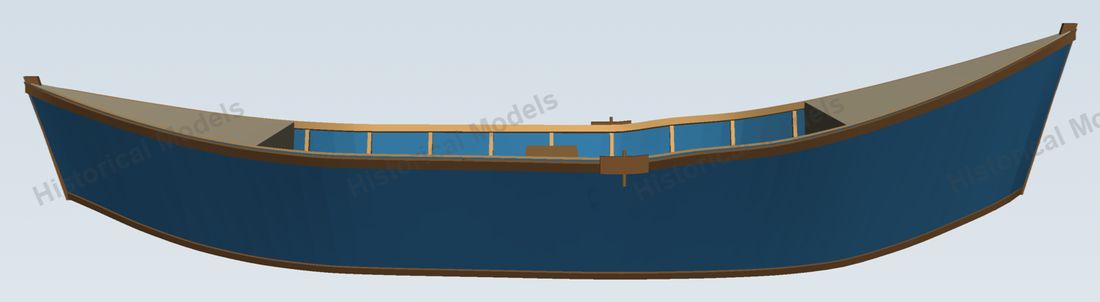
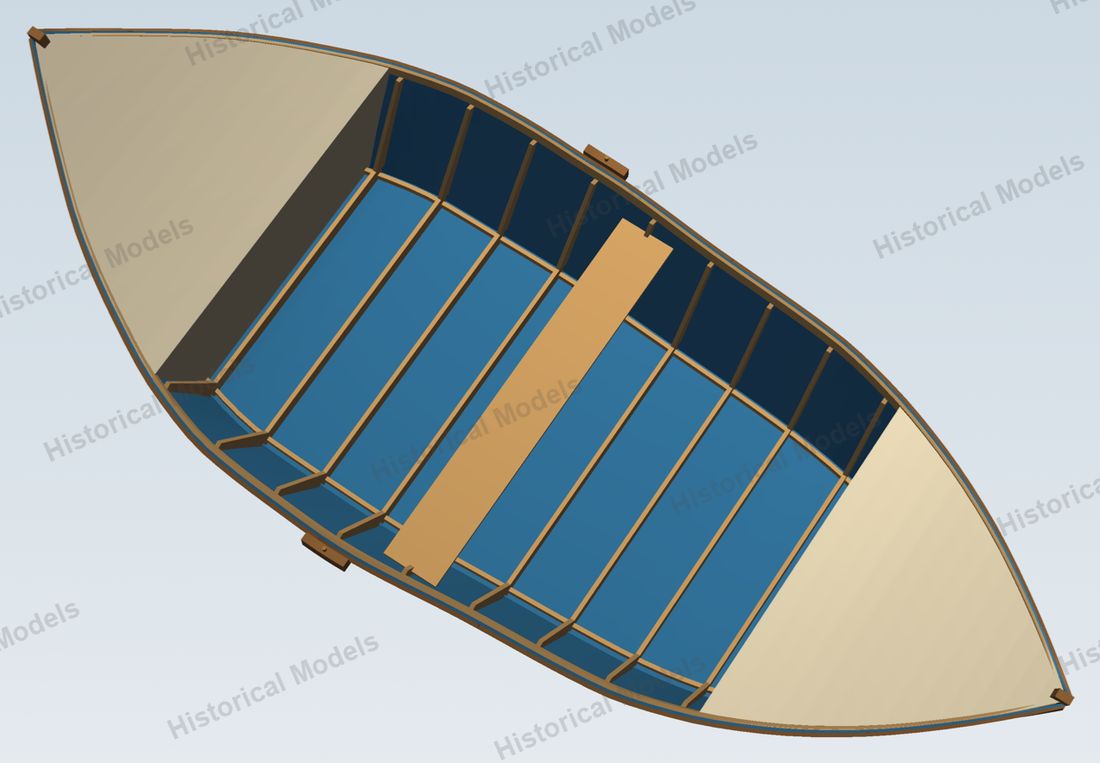
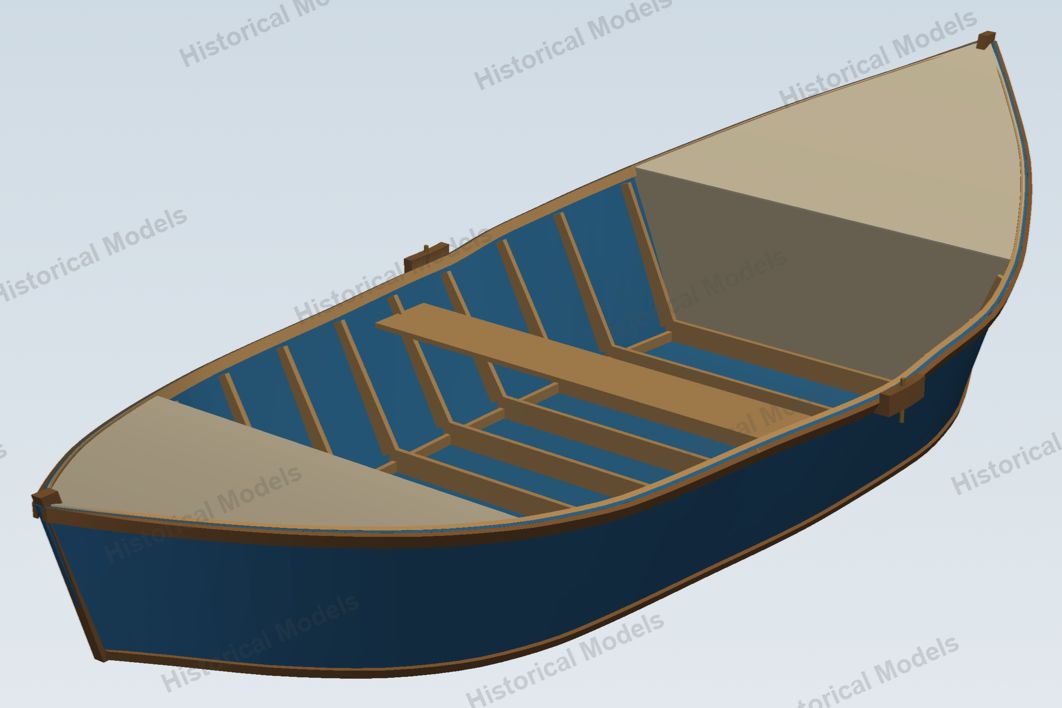
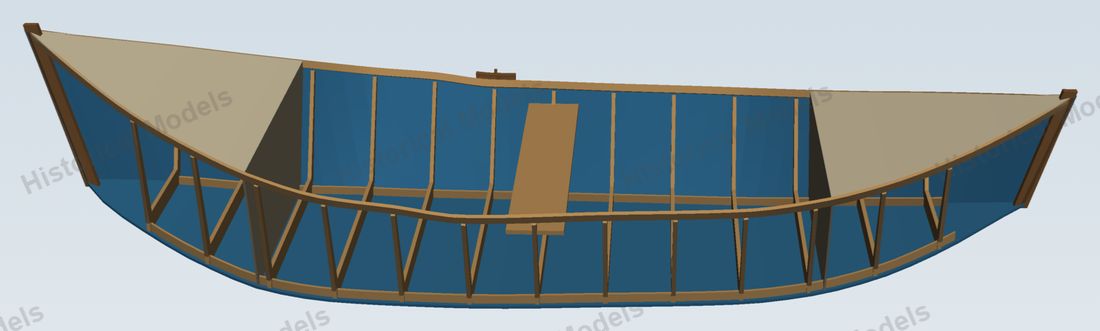
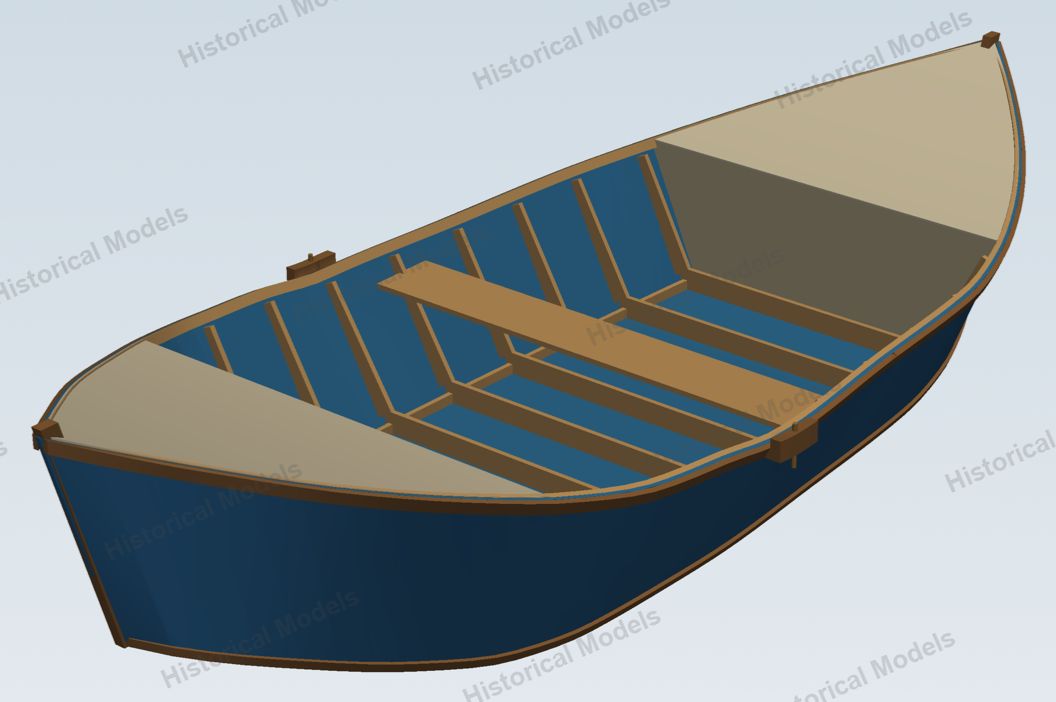
Computer pictures of the boat put together from nothing but the plan's own part files, each in its place.
The real boat
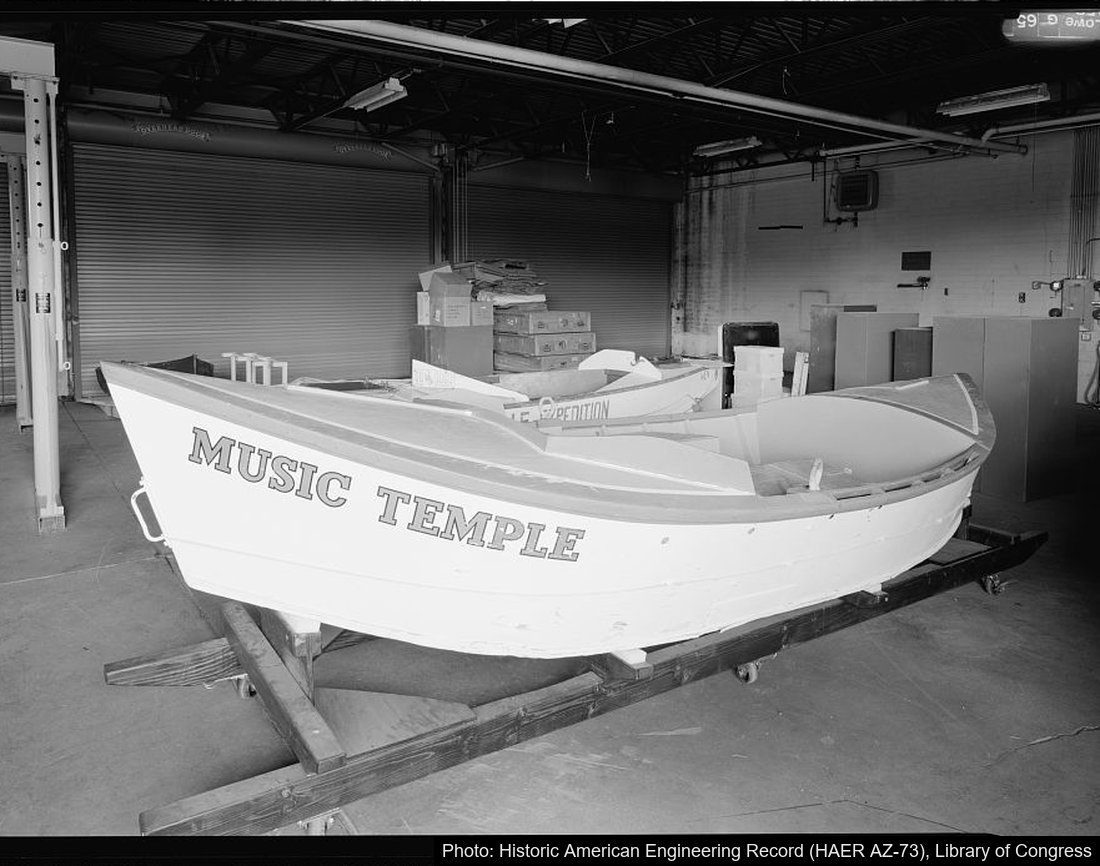
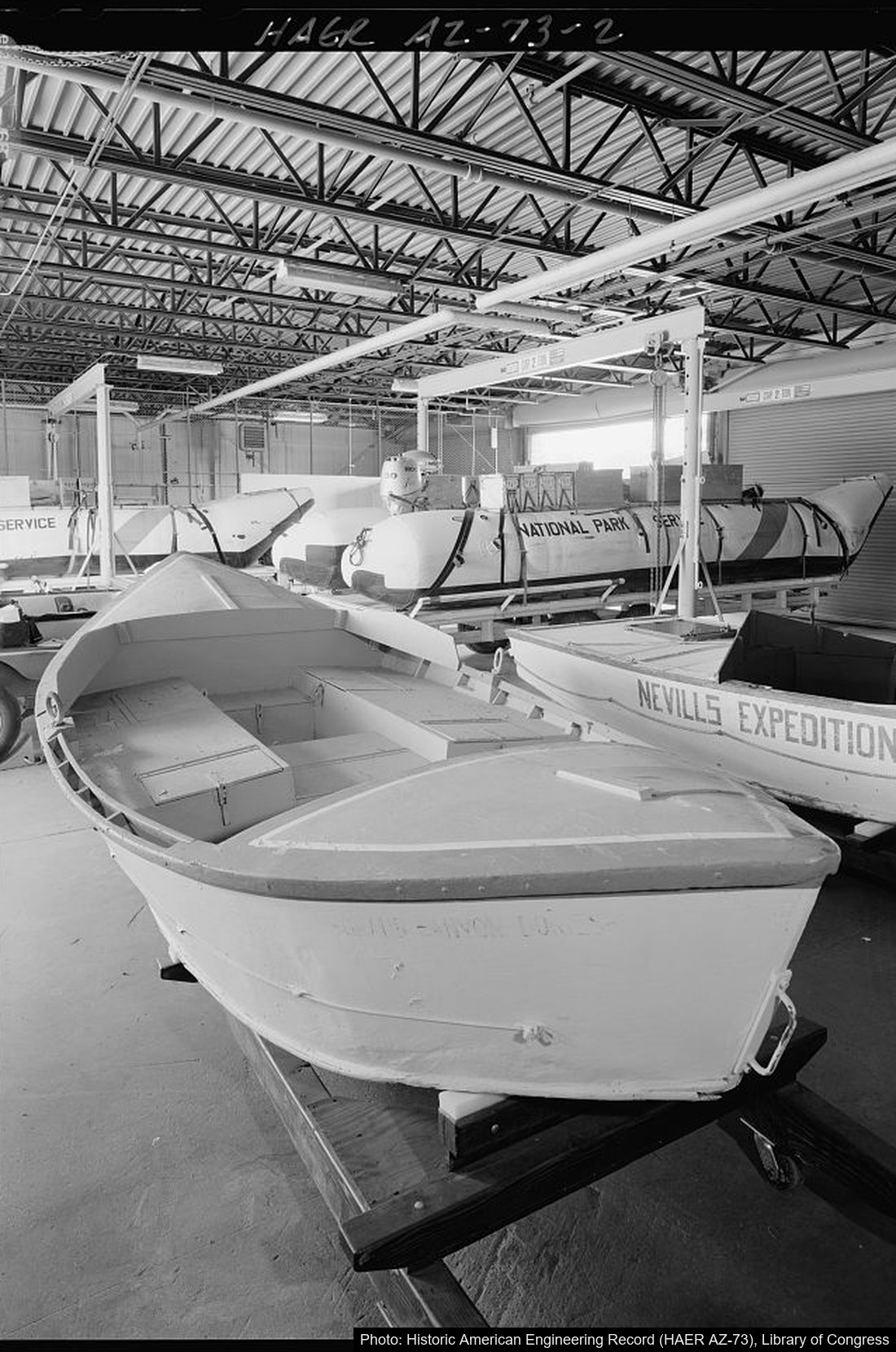
Photographs of the boat this plan was measured from, taken for the Historic American Engineering Record (National Park Service; Library of Congress).
Finished size
1:12 (1 inch = 1 foot)
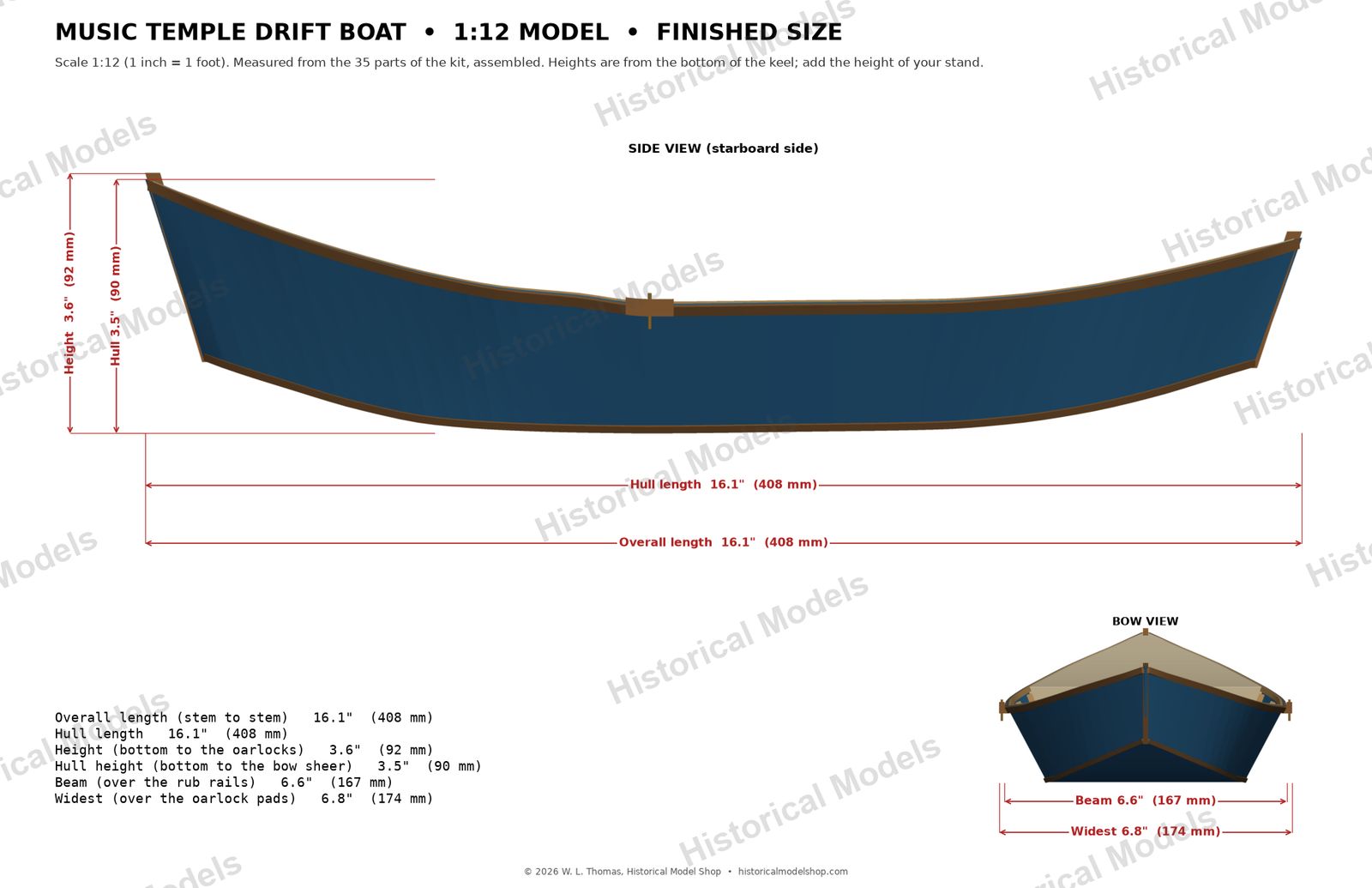
1:8 (1 1/2 inch = 1 foot)
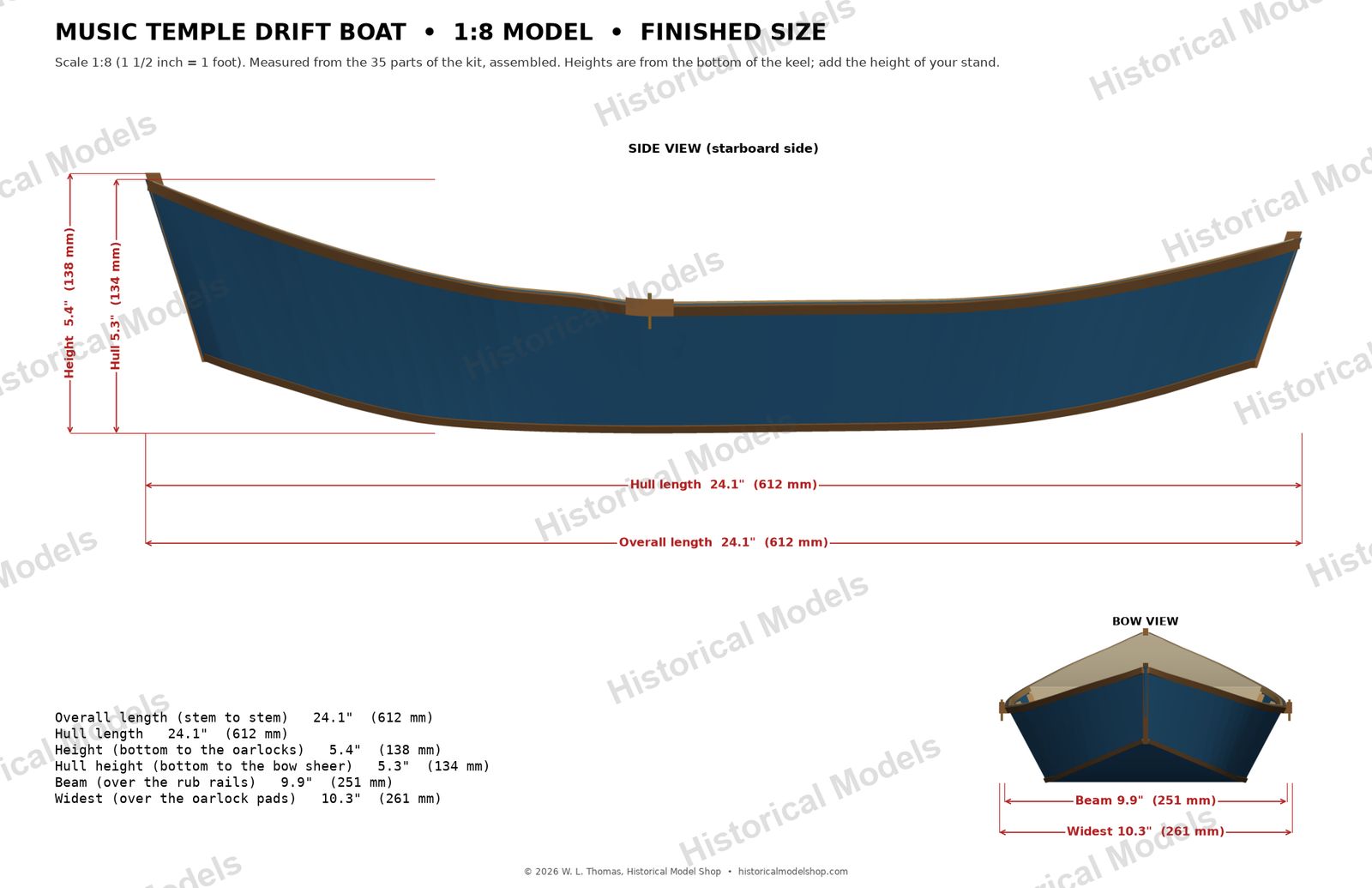
What is in each plan
- Every part as a STEP file (inches) and as an STL file (millimetres), at model size and each in its exact place: open them together and the boat assembles itself. Ready for PrusaSlicer, Bambu Studio, OrcaSlicer or Cura, or for CAD and CNC.
- Drawing sheets (PDF, letter size), one for each different part, with a 1-inch check square, and the parts book with every sheet in one PDF.
- The build guide: her story, then the boat in stages, each with a picture of the model so far.
- The size drawing with every measurement.
Where the plan comes from
This plan is built from the Historic American Engineering Record's measured drawings of the boat, HAER AZ-73 (National Park Service; drawn by Todd Bloch, 2004): the lines and table of offsets (sheer and chine heights and half-breadths at 15 stations), and the long section, deck plan, details and scantlings (1/2" plywood sides and bottom, 1/4" plywood decks, 3/4" fir frames and floors, oak rub rails and chine rails, fir clamps, 3/8" plywood bulkheads, the oarlock detail).
Two printed offsets are misprints and are corrected (chine half-breadth at station 3, chine height at station 13). The frame positions (the drawing says 'typically 12 or 15 inches'), the chine logs, the stems' size, the seat and the oarlock pads are RECONSTRUCTED and say so on their sheets. The side compartments' hatch lids, handles and rope work are left out to keep this a beginner's plan.
You may not sell, share or distribute the plan or its files, but you are welcome to build this boat, as many as you like, and to sell the models you build. These are digital files and, as such, there are no refunds.
Building the history of America is what this project is for. Enjoy!
— W. L. Thomas, Historical Model Shop, historicalmodelshop.com