Home › Steam Tug Hercules
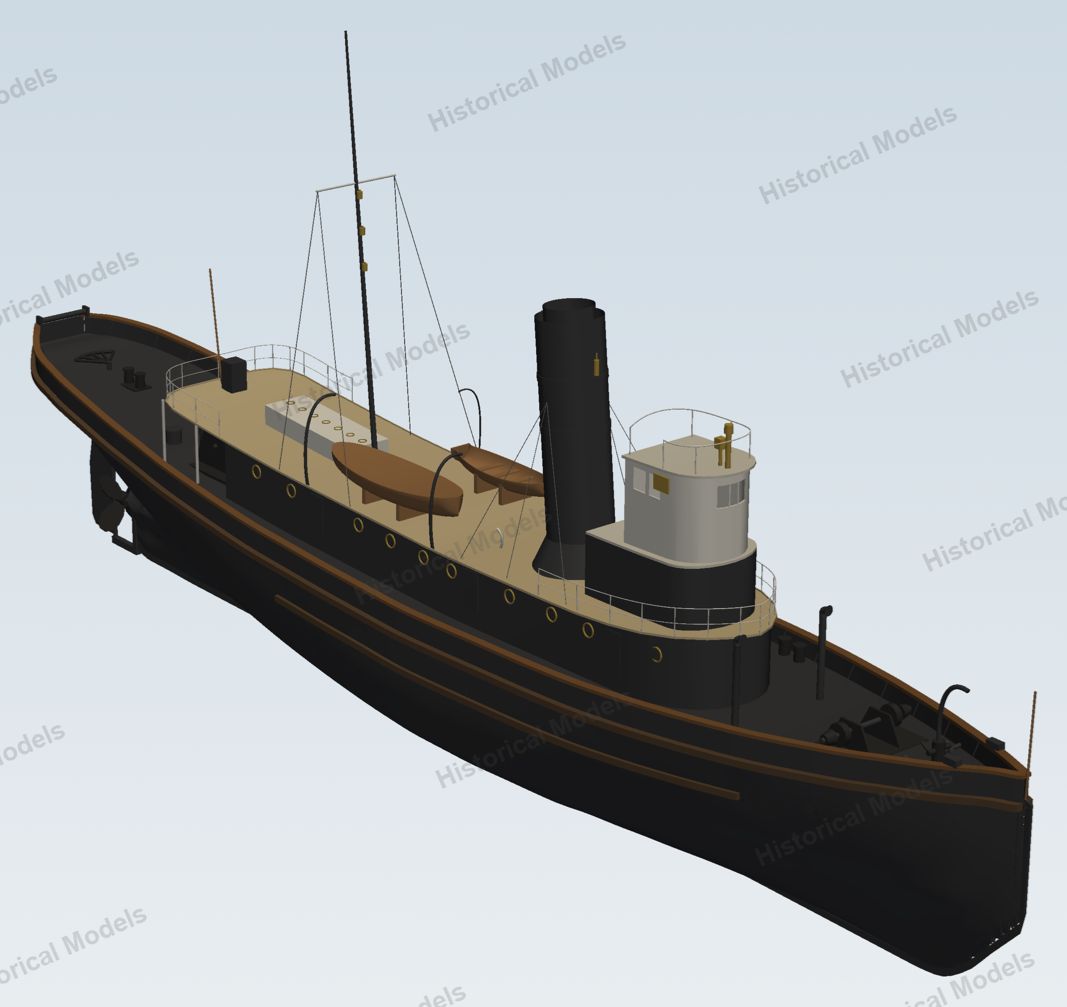
Steam Tug HerculesOcean-going steam tug, 1907 · model plan at 1:48 and 1:64 · every part in STEP and STL · every part drawn
A 151-foot riveted-steel steam tug that towed her sister 14,000 miles round South America in 1908, built plate by plate from the National Park Service's measured drawings of the real tug, still steaming in San Francisco.
614 files, 684 parts, 483 drawing sheets
614 files, 684 parts, 483 drawing sheets
Digital files. Nothing is shipped. No refunds.
Watch her build
Every part of the plan going on one at a time, in the order of the build guide.
Her story
Built for the Red Stack fleet
HERCULES and her sister GOLIAH were ordered in 1907 by the Shipowners and Merchants Tugboat Company of San Francisco, the 'Red Stack' line, from John H. Dialogue and Son of Camden, New Jersey. Most harbor tugs of the day were wooden with two-cylinder engines; these were 150-foot riveted-steel ocean tugs with triple-expansion engines, steam steering, a steam windlass and capstan, and an automatic steam towing machine for wire hawser. The owners' agent thought them too narrow and too deep: HERCULES was already plated, but GOLIAH's frames were heated and bent outward, so the sisters differ slightly in beam.
Fourteen thousand miles
They sailed on January 31, 1908. HERCULES towed GOLIAH round South America through the Strait of Magellan to San Francisco, arriving April 11 after a little over 68 days, the two using their masts and sails to help and GOLIAH carrying fuel for HERCULES. By the HAER account it was the longest tow on record at the time.
Ocean towing
Until the early 1920s she worked the open ocean: lumber and log rafts from the Columbia River, oil barges, disabled steamers, a caisson to Pearl Harbor for its first drydock (1912), lock gates to Panama, and the dredge SAN DIEGO through the new canal to Jacksonville, her only East Coast voyage. In 1920 she towed the disabled motorship LAUREL WHALEN from Tahiti to Vancouver.
The railroad years
From 1924 the Western Pacific Railroad used her to push and hip-tow car floats round San Francisco Bay until about 1962. That work gave her the heavy starboard guard, bigger bow chocks, a bigger rudder, a doghouse and then (1941) the raised pilothouse that let the helmsman see over the barges, and a steel mainmast in place of the wooden one; her foremast, wireless and anchor davit went.
Saved
Laid up in the Oakland Estuary after 1962, she was bought by the State of California in 1975, named a National Historic Landmark in 1986, and is now at the Hyde Street Pier, San Francisco Maritime National Historical Park. Volunteers and staff brought her steam plant back to working order and she still steams on the bay. HAER measured her in dry dock in April 1998: those drawings are what this model is built from.
Built from the parts
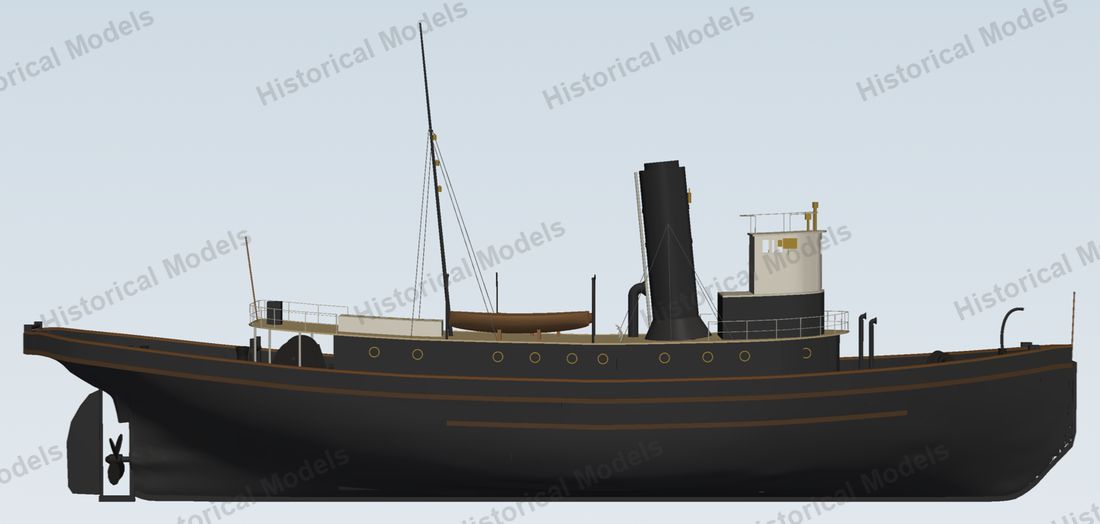
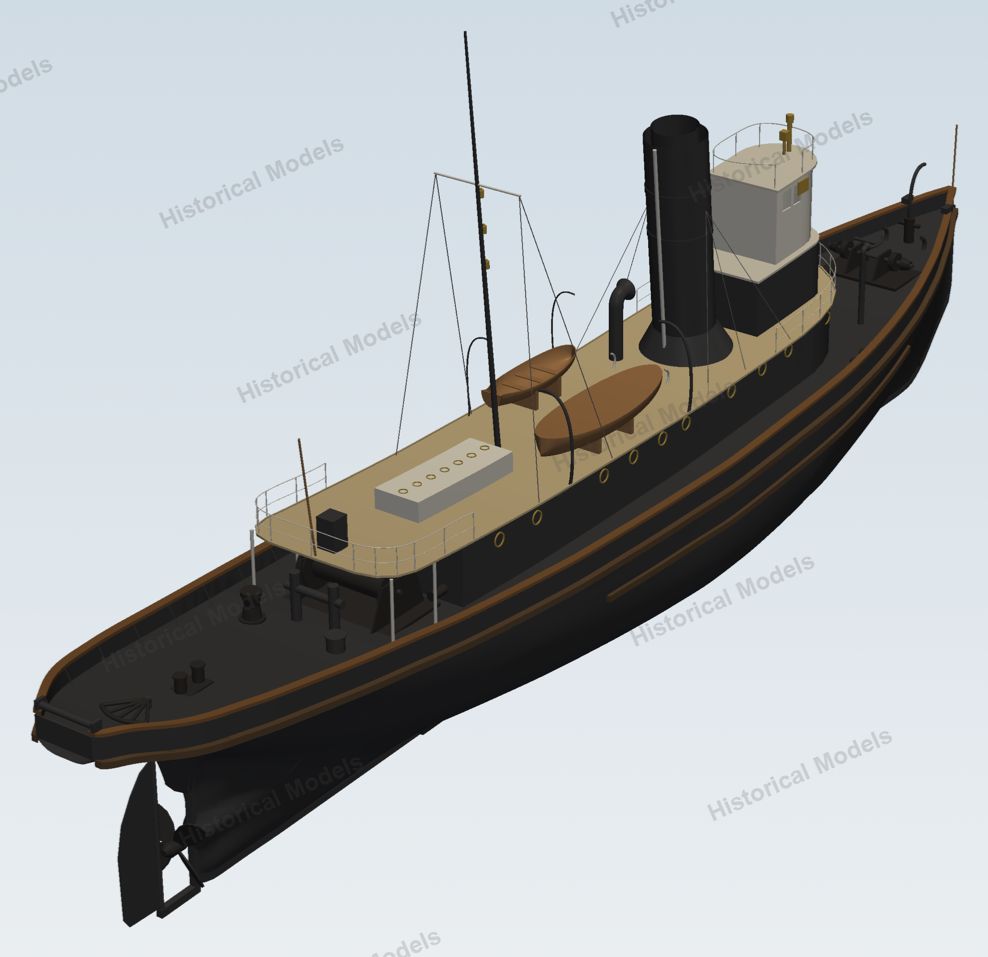
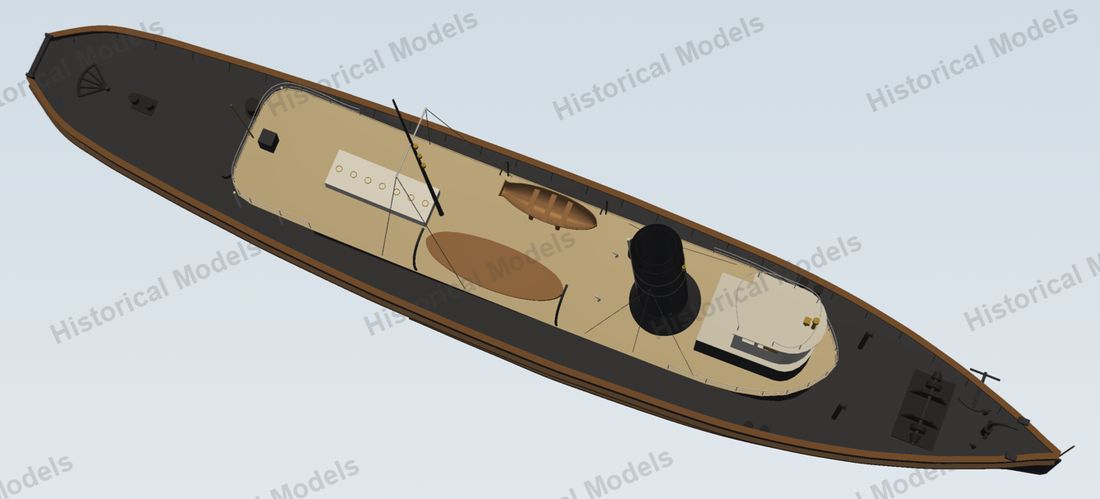
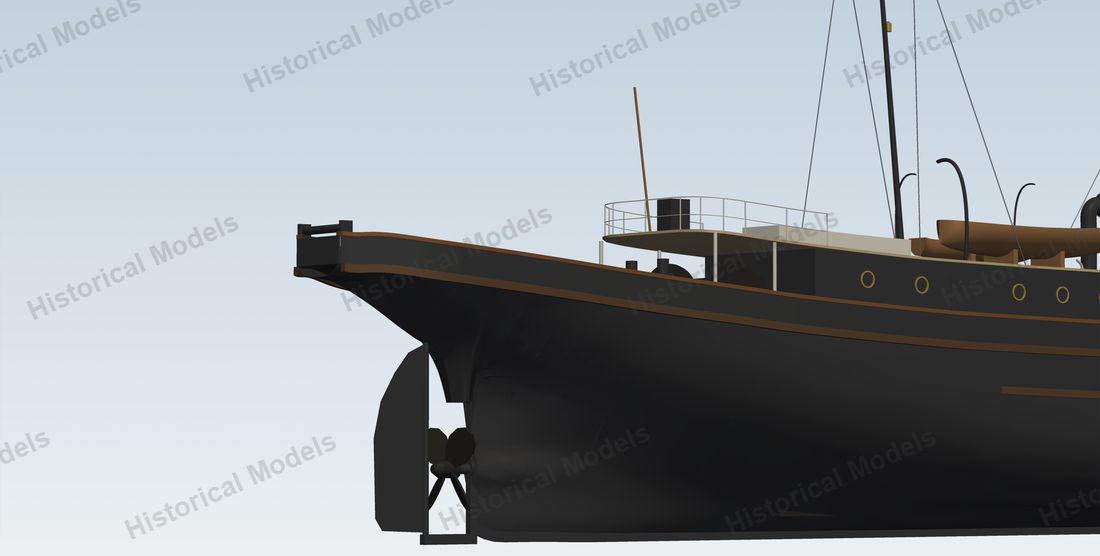
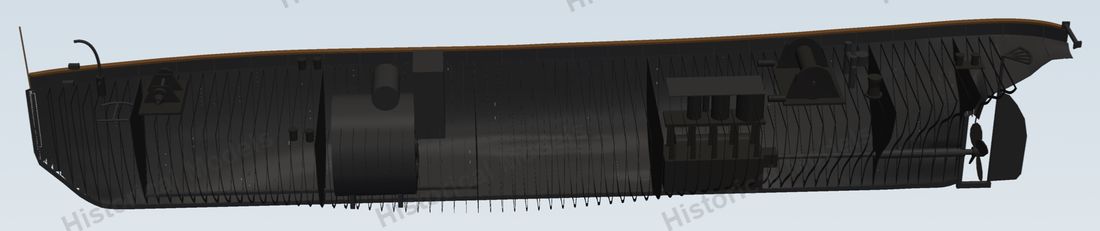
Computer pictures of the boat put together from nothing but the plan's own part files, each in its place.
Finished size
1:48 (1/4 inch = 1 foot)
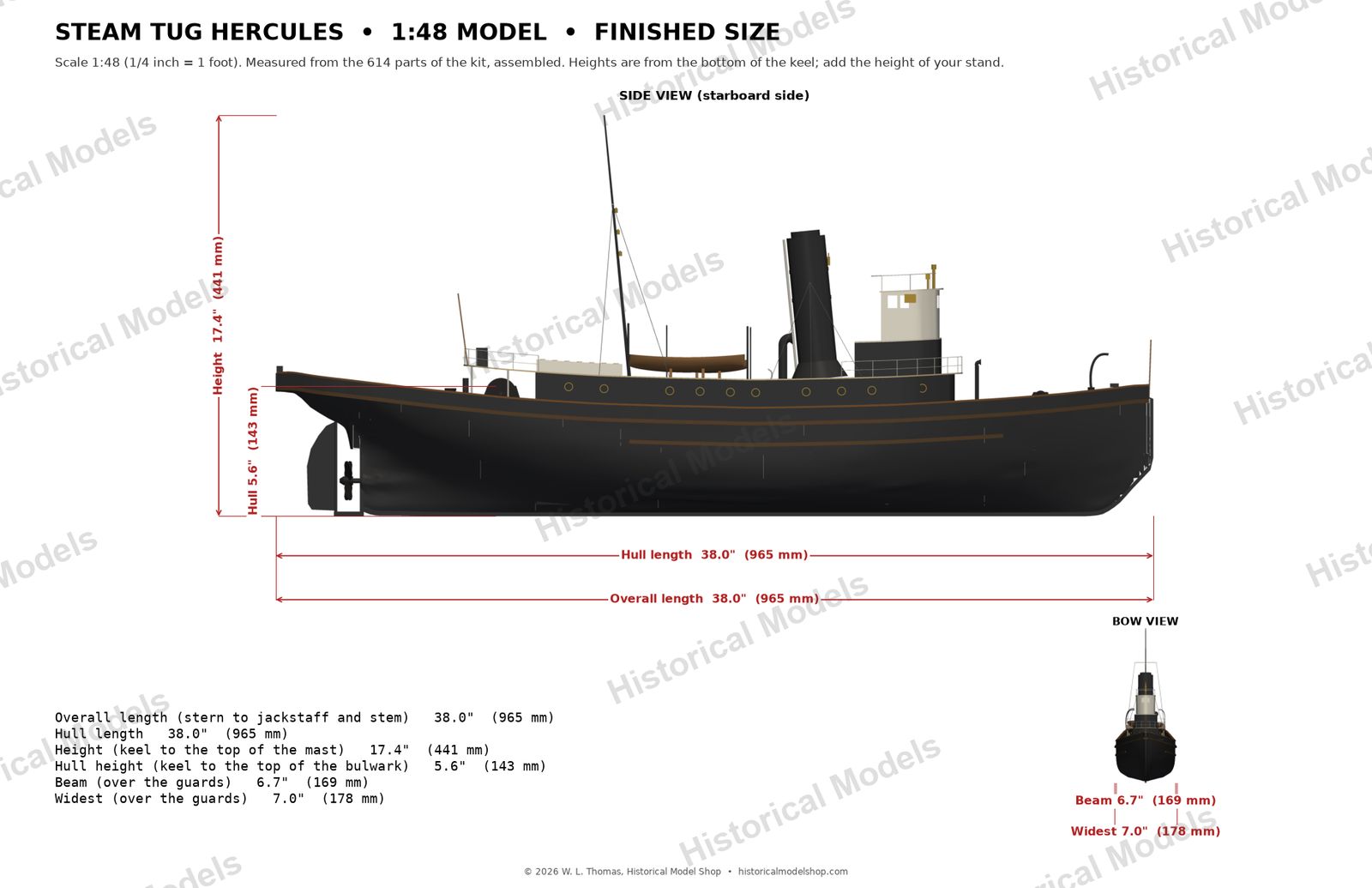
1:64 (3/16 inch = 1 foot)
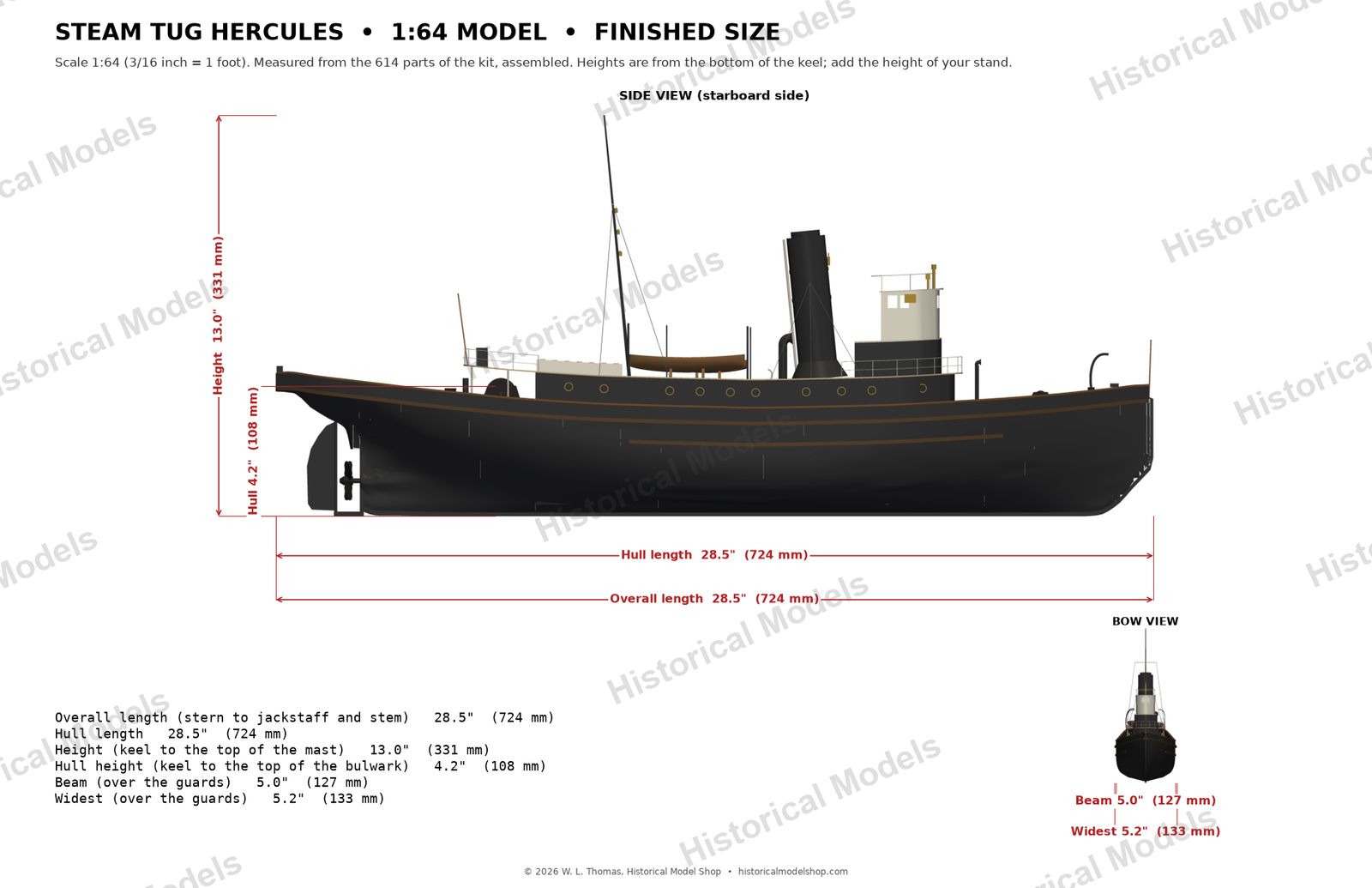
What is in each plan
- Every part as a STEP file (inches) and as an STL file (millimetres), at model size and each in its exact place: open them together and the boat assembles itself. Ready for PrusaSlicer, Bambu Studio, OrcaSlicer or Cura, or for CAD and CNC.
- Drawing sheets (PDF, letter size), one for each different part, with a 1-inch check square, and the parts book with every sheet in one PDF.
- The build guide: her story, then the boat in stages, each with a picture of the model so far.
- The size drawing with every measurement.
Where the plan comes from
This plan is built from the Historic American Engineering Record's measured drawings of the tug, HAER CA-62 (National Park Service, 1997-98; drawn by Dana Lockett, partly from Tri-Coastal Marine drawings by M. D. Strange, 1989): the table of offsets (32 stations, 9 waterlines, 4 buttocks, sheer and rabbet) for the hull shape; the hull expansion plan for every shell plate; the inboard profile, deck plans and sections for the frames, bulkheads, deckhouse, wheelhouse, stack, mast, boats, deck machinery and engine room; and the HAER written history.
She is modelled as measured in 1997-98: the raised 1941 wheelhouse, the steel mainmast, one lifeboat and a skiff, and the enlarged rudder. Parts the drawings show but do not size (the engine's columns, the windlass and towing winch details, the boats' lines, the propeller blades, the lights) are RECONSTRUCTED to the drawn outline and say so on their sheets. The real hull is riveted with lapped 'in and out' strakes; the model's plates meet flush.
You may not sell, share or distribute the plan or its files, but you are welcome to build this boat, as many as you like, and to sell the models you build. These are digital files and, as such, there are no refunds.
Building the history of America is what this project is for. Enjoy!
— W. L. Thomas, Historical Model Shop, historicalmodelshop.com