Home › USS Saginaw's Gig
USS Saginaw's GigNavy gig, c.1859 - decked over and sailed 1,600 miles for help in 1870 · model plan at 1:12 and 1:16 · every part in STEP and STL · every part drawn
The 24-foot gig of the Civil War-era side-wheeler USS Saginaw, which five of her wrecked crew decked over with canvas and sailed from Kure Atoll to Hawaii to save their shipmates - built part by part from the National Park Service's 2017 survey of the boat.
105 files, 190 parts, 84 drawing sheets
105 files, 190 parts, 84 drawing sheets
Digital files. Nothing is shipped. No refunds.
Watch her build
Every part of the plan going on one at a time, in the order of the build guide.
Her story
The ship
USS Saginaw, a wooden side-wheel steamer, was the first ship built at the Mare Island Navy Yard in California - launched in 1859 as Toucey and commissioned in 1860. She served off China against pirates, and in the Civil War patrolled the Pacific coast against Confederate raiders and guarded the steamers carrying gold from California. After the war she charted the coast of newly bought Alaska.
The wreck
On 29 October 1870, homeward bound from Midway, she struck a reef off Ocean Island (Kure Atoll) at the far end of the Hawaiian chain and was battered to pieces. Her crew got most of her stores ashore, but no ship would ever come looking there.
The voyage
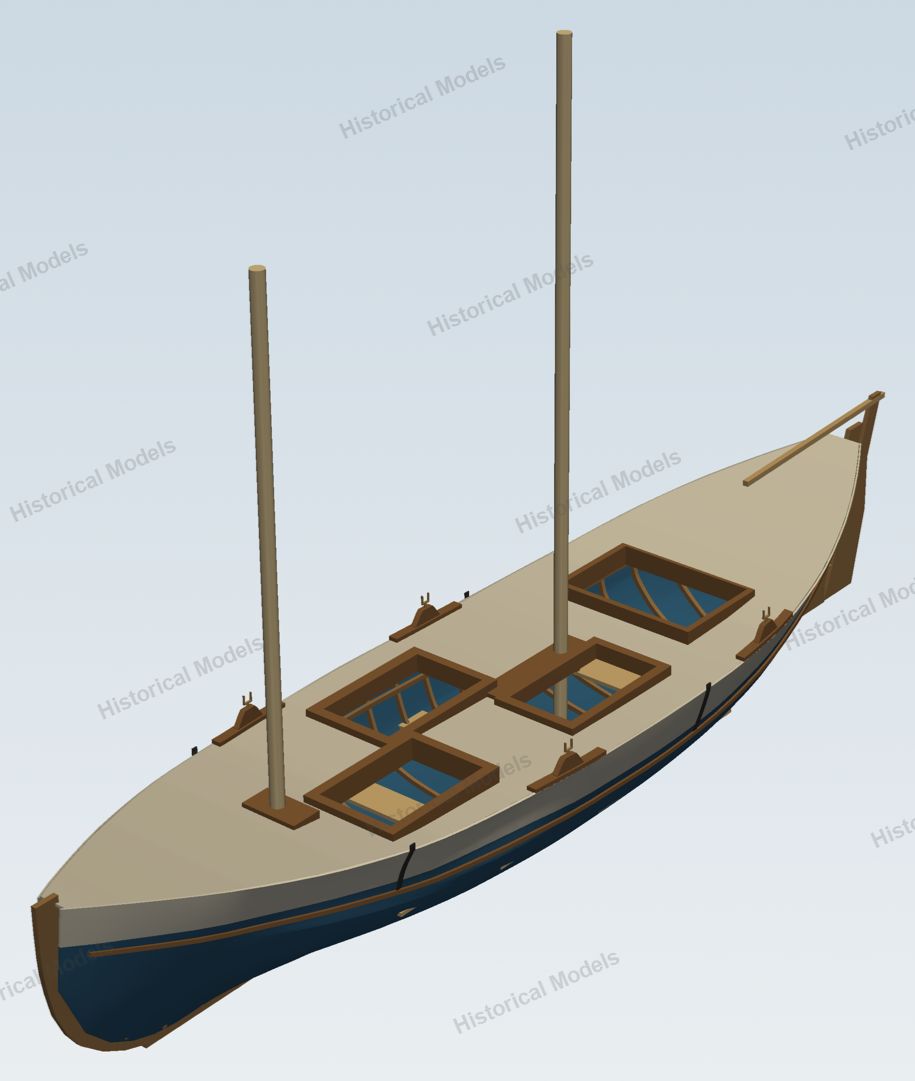
So they rebuilt this gig - her 24'-9" double-ended boat - for the open ocean: they raised her sides several inches, decked her over with wood and canvas, left four hatches for the rowers, and gave her two masts and sails. On 18 November 1870 Lieutenant John G. Talbot, Coxswain William Halford, Quartermaster Peter Francis and Seamen John Andrews and James Muir sailed her 1,600 miles to the Hawaiian Islands. After 31 days she capsized in the surf off Kauai; Talbot, Francis and Andrews drowned, and Muir died soon after. Halford alone reached the Hawaiian government, which sent the steamer Kilauea - and every man left on the atoll was saved. Halford received the Medal of Honor. The gig survives in the U.S. Navy's collection.
Built from the parts
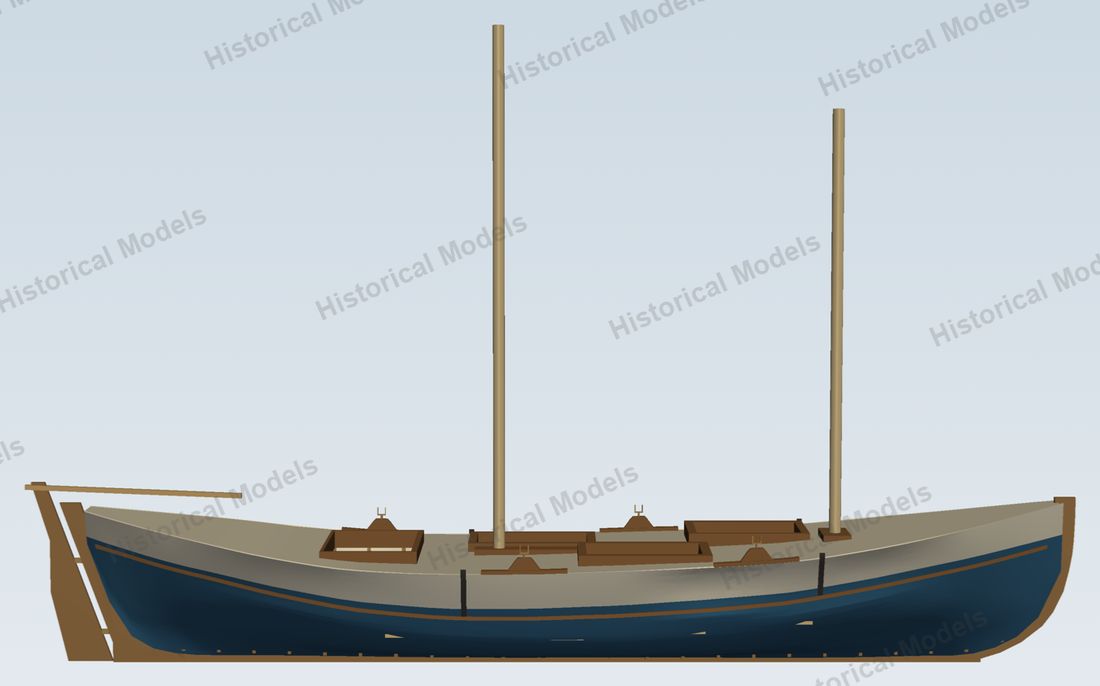
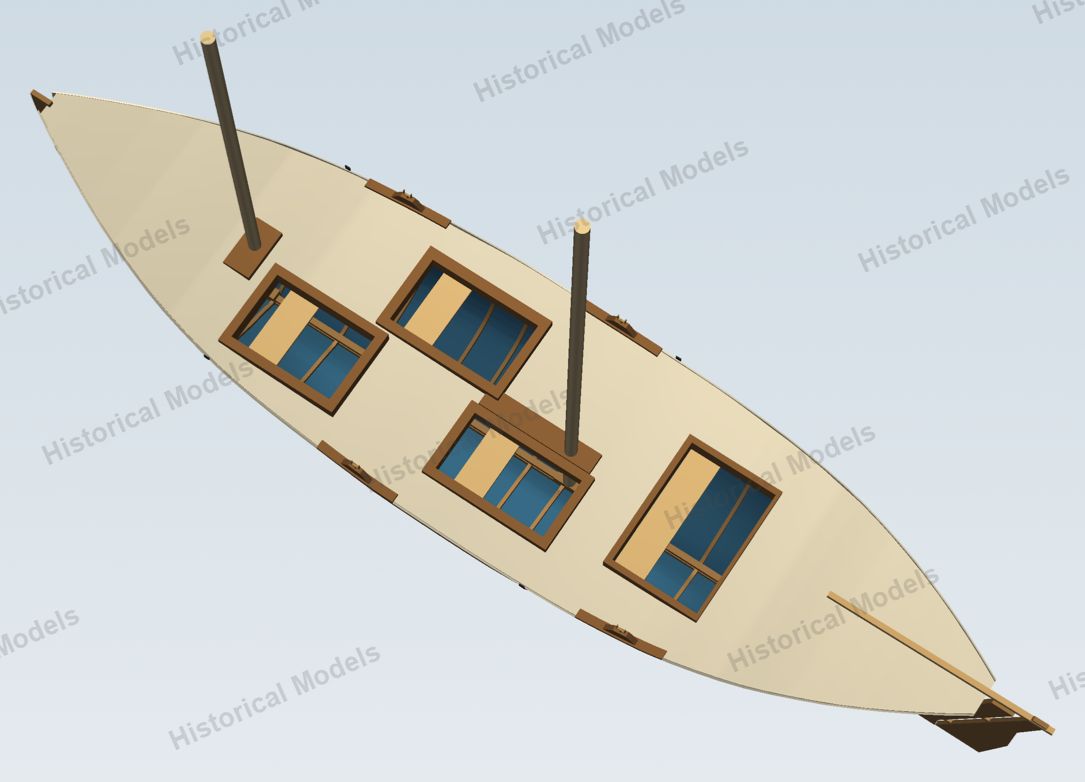
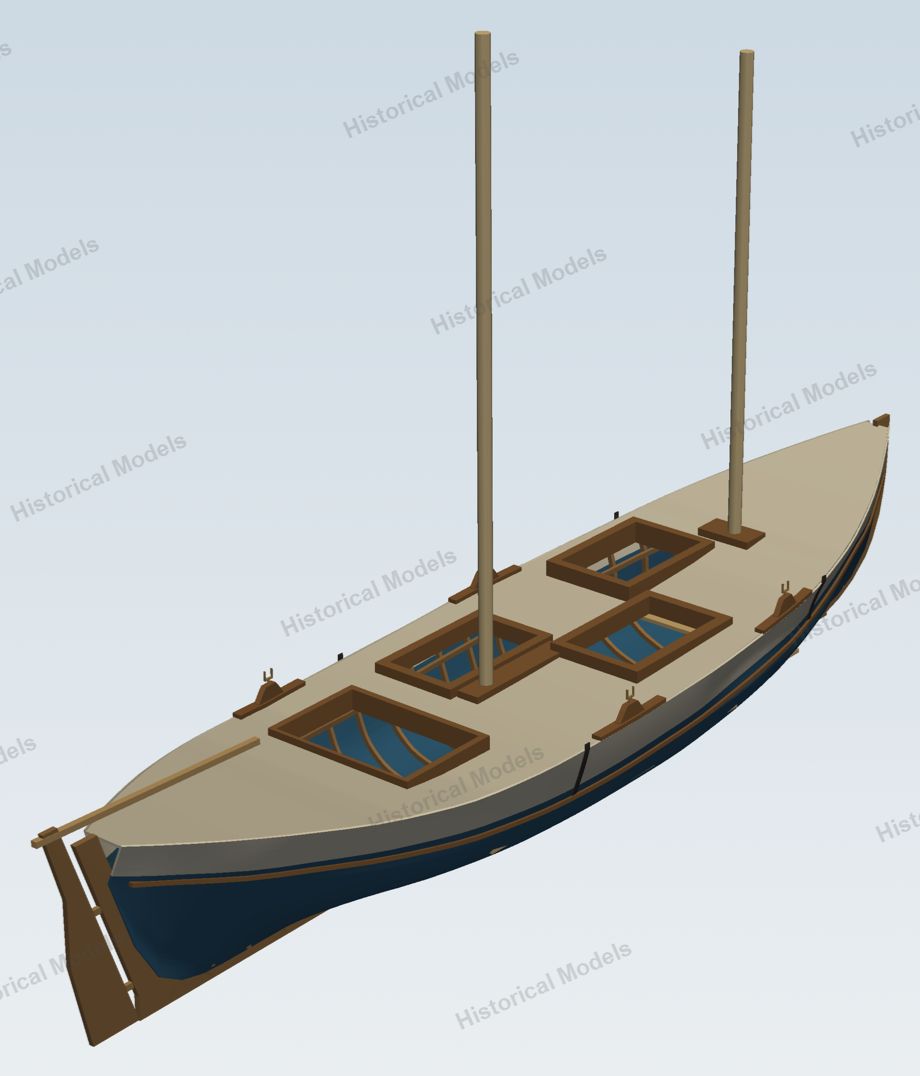
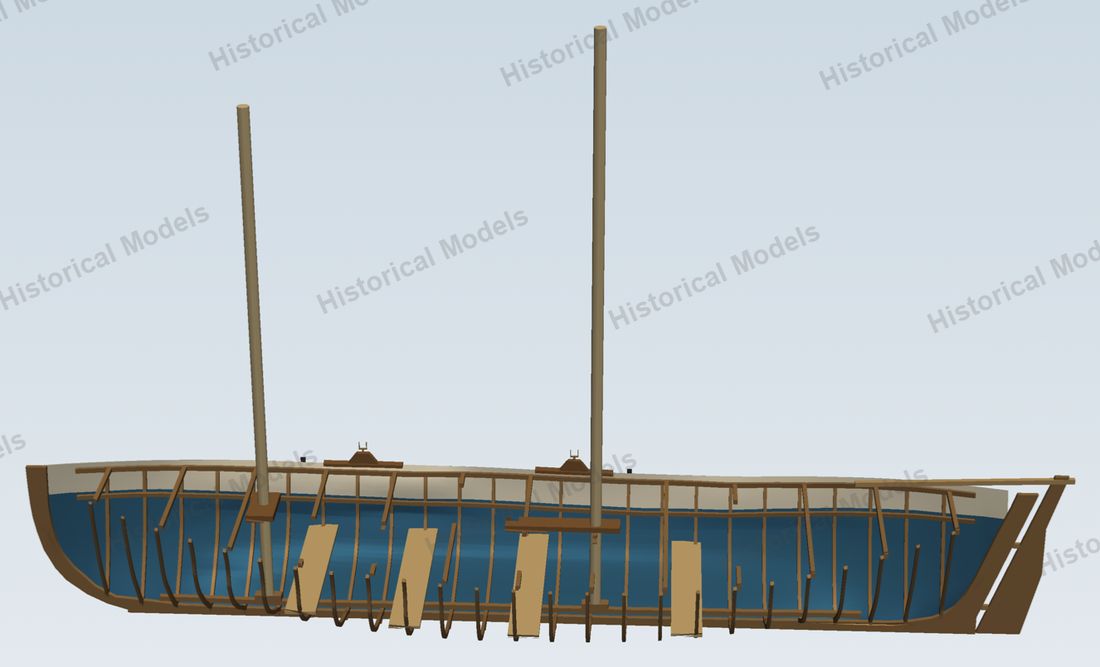
Computer pictures of the boat put together from nothing but the plan's own part files, each in its place.
The real boat
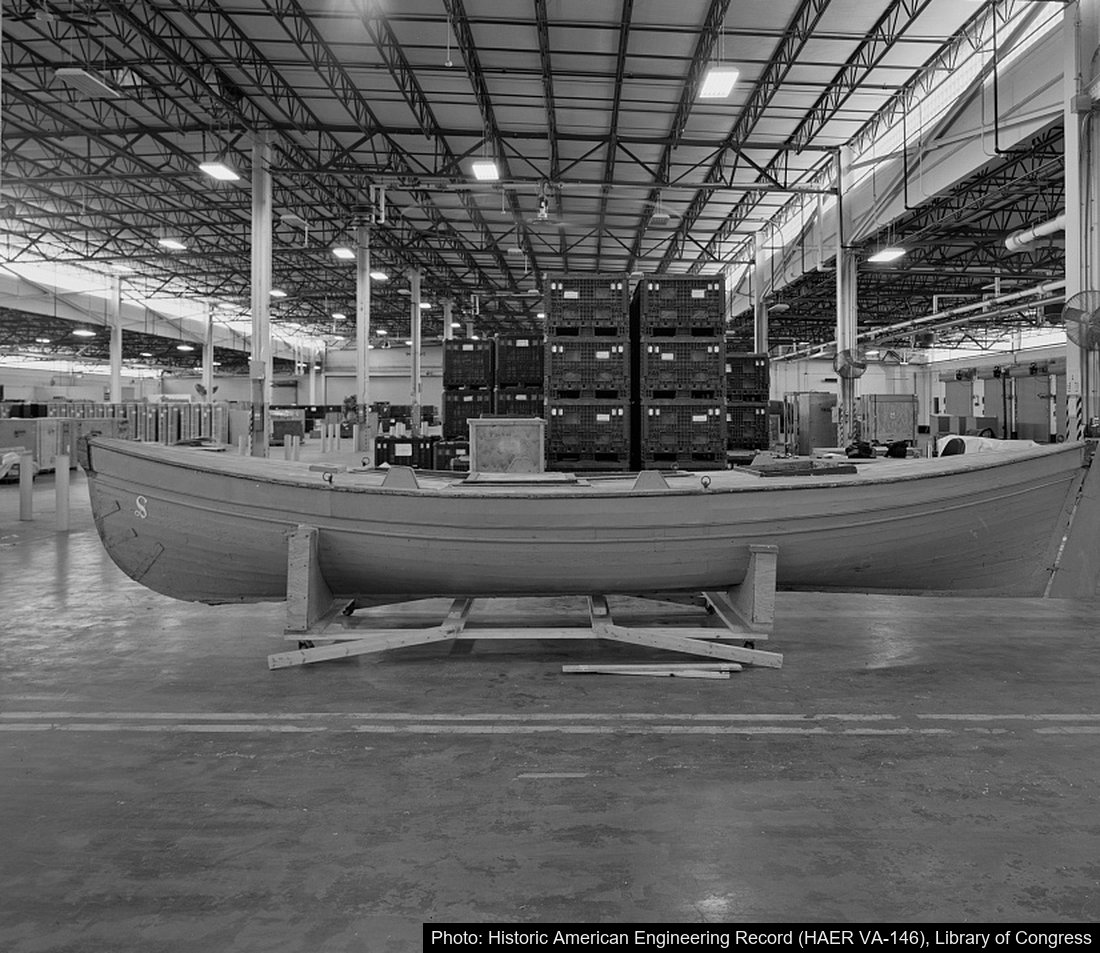
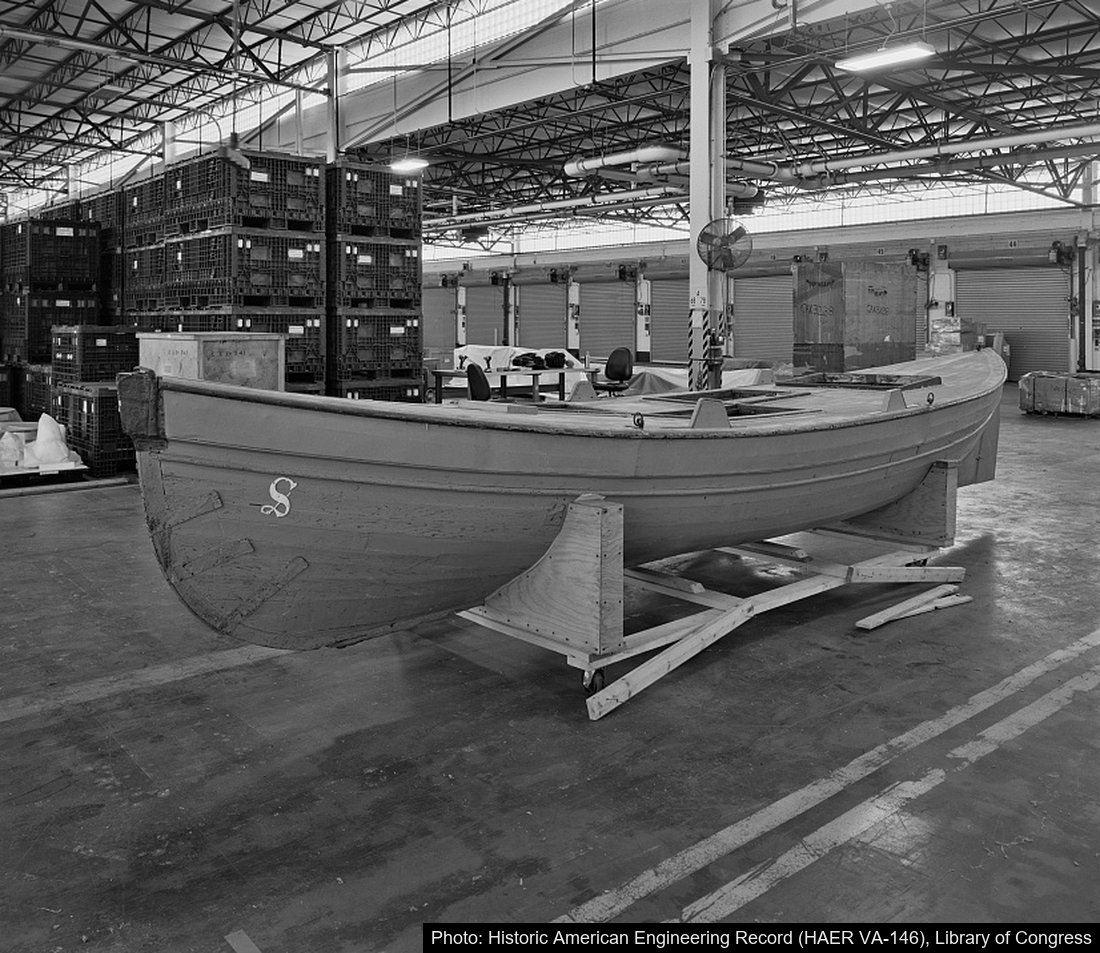
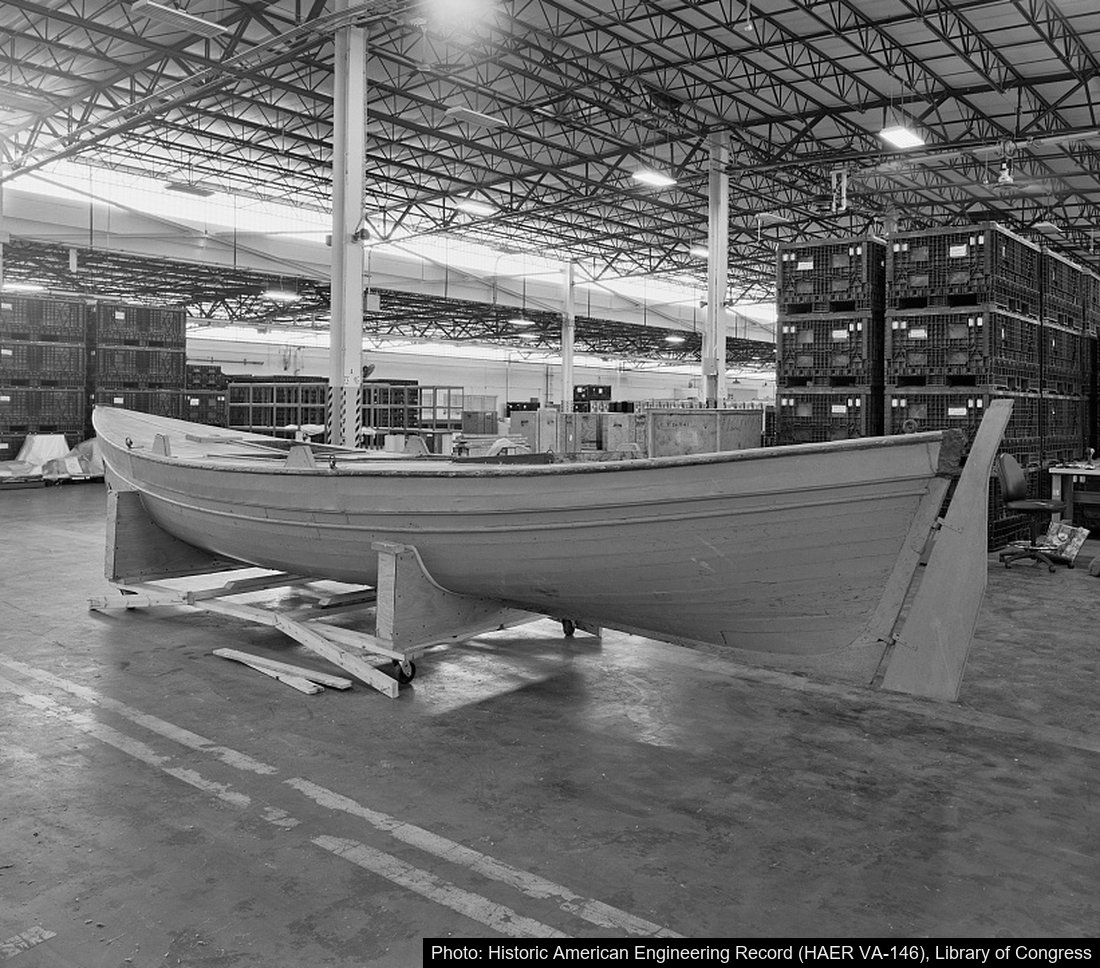
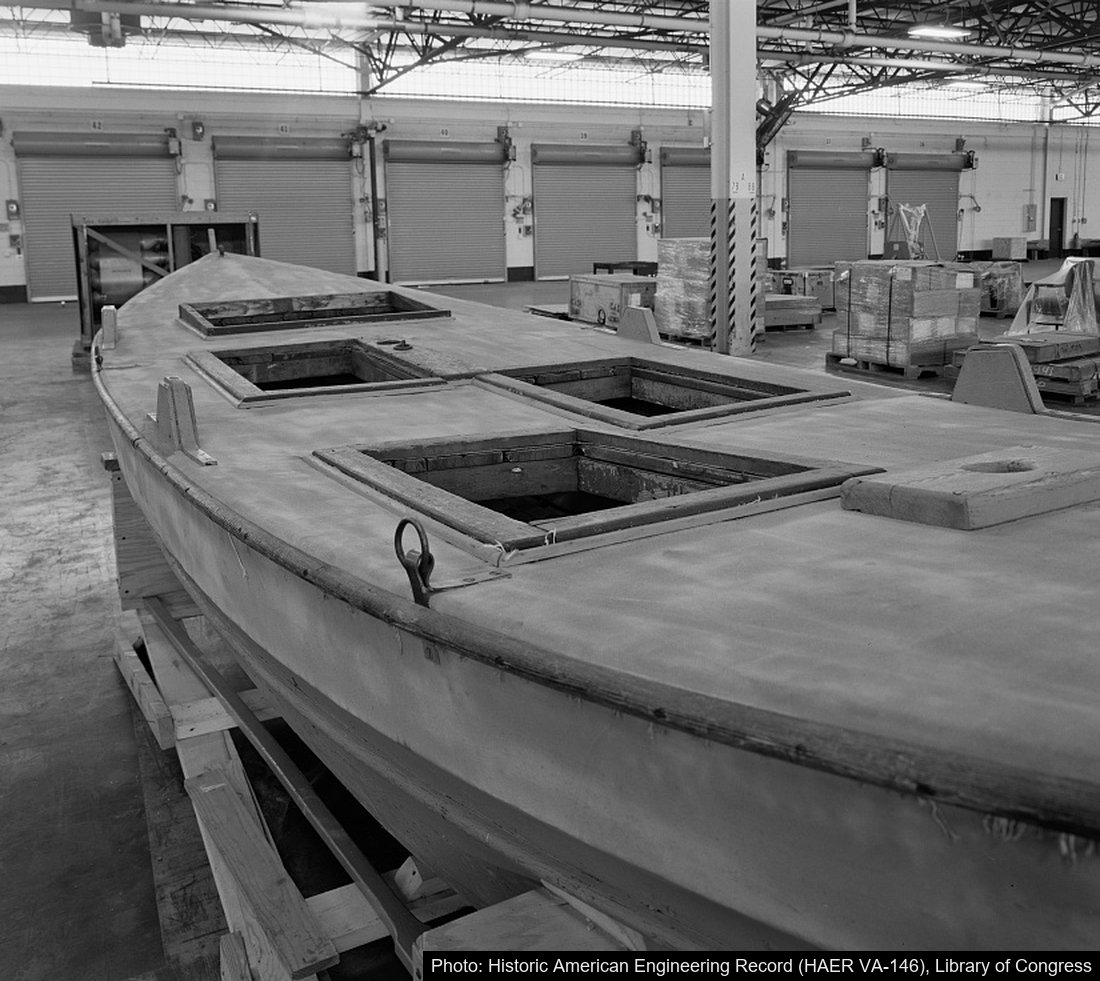
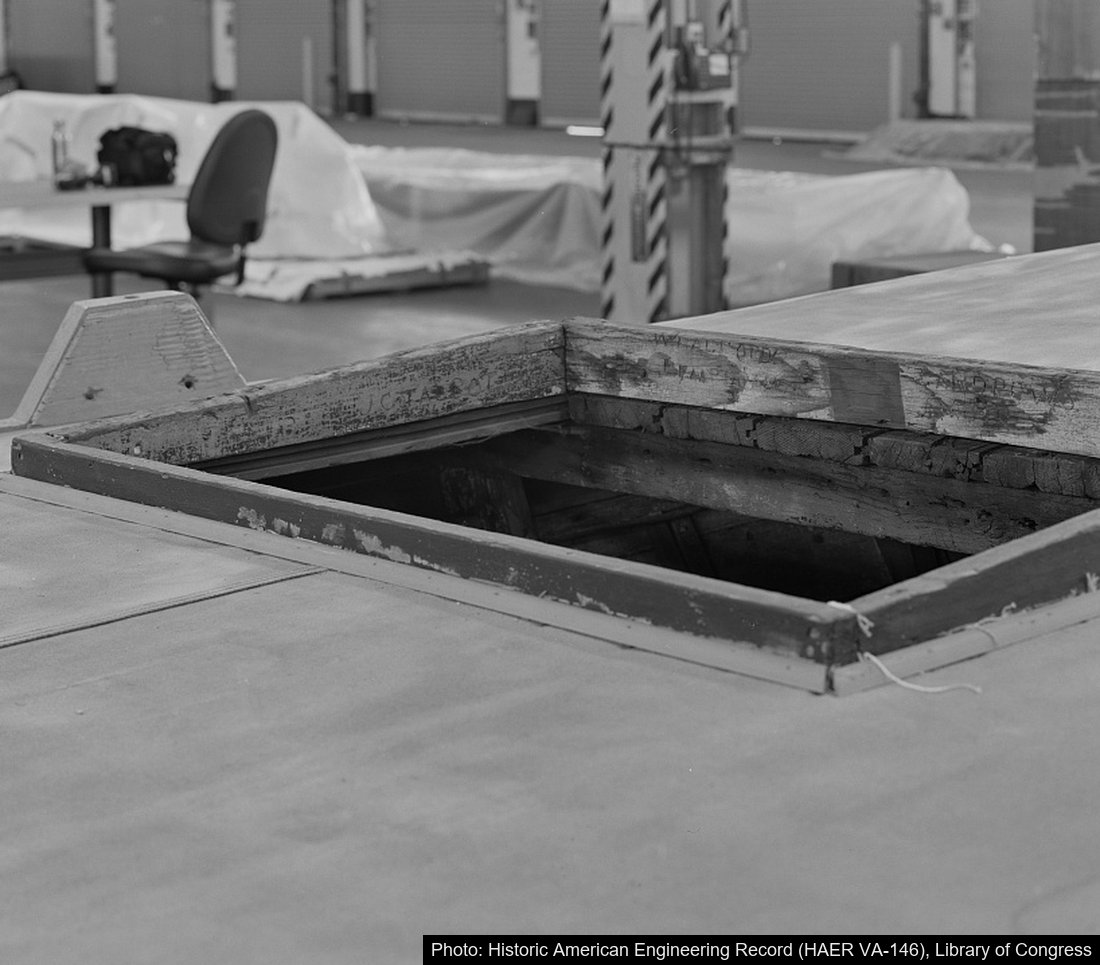
Photographs of the boat this plan was measured from, taken for the Historic American Engineering Record (National Park Service; Library of Congress).
Finished size
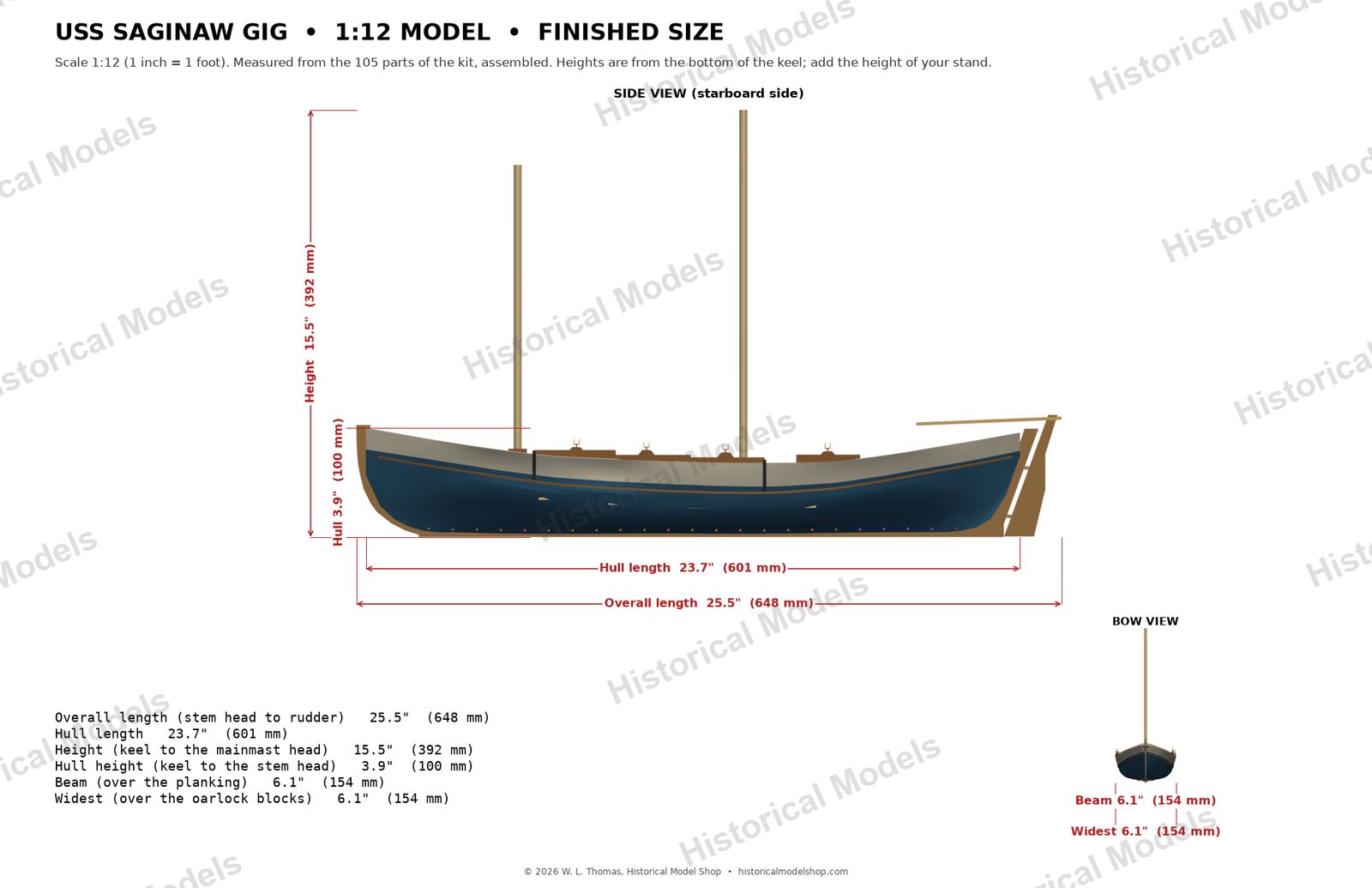
1:12 (1 inch = 1 foot)
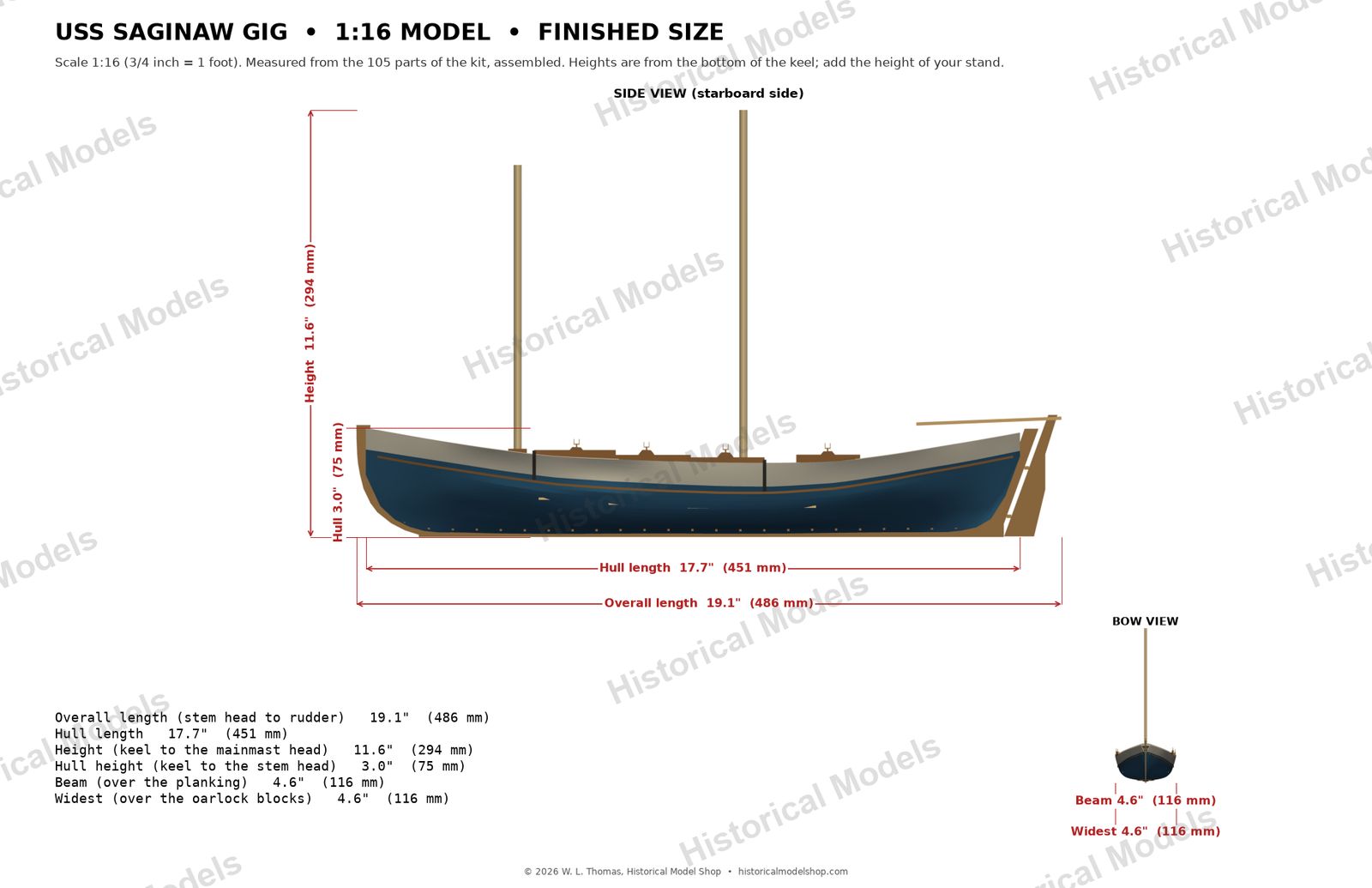
1:16 (3/4 inch = 1 foot)
What is in each plan
- Every part as a STEP file (inches) and as an STL file (millimetres), at model size and each in its exact place: open them together and the boat assembles itself. Ready for PrusaSlicer, Bambu Studio, OrcaSlicer or Cura, or for CAD and CNC.
- Drawing sheets (PDF, letter size), one for each different part, with a 1-inch check square, and the parts book with every sheet in one PDF.
- The build guide: her story, then the boat in stages, each with a picture of the model so far.
- The size drawing with every measurement.
Where the plan comes from
This plan is built from the Historic American Engineering Record's measured drawings, HAER VA-146 (National Park Service; drawn by Todd A. Croteau, 2017, from a total-station and photogrammetry survey of the boat): the lines plan with its table of offsets (ten stations 2 ft apart, buttocks, waterlines, the sheer at the rub strip, the rabbet and keel), the profile and deck plan, and the data pages with the U.S. Naval History and Heritage Command's history.
The drawings show her 'as is', with a hog of 2 5/8" in the keel from her long years in storage; this model takes the hog out, so she sits on a straight keel as built. The plank, frame and deck sizes, the inside framing of the 1870 deck, and the mast heights (no record of the rig survives beyond two masts) are RECONSTRUCTED and say so on their sheets.
You may not sell, share or distribute the plan or its files, but you are welcome to build this boat, as many as you like, and to sell the models you build. These are digital files and, as such, there are no refunds.
Building the history of America is what this project is for. Enjoy!
— W. L. Thomas, Historical Model Shop, historicalmodelshop.com