Home › St. Lawrence River Skiff
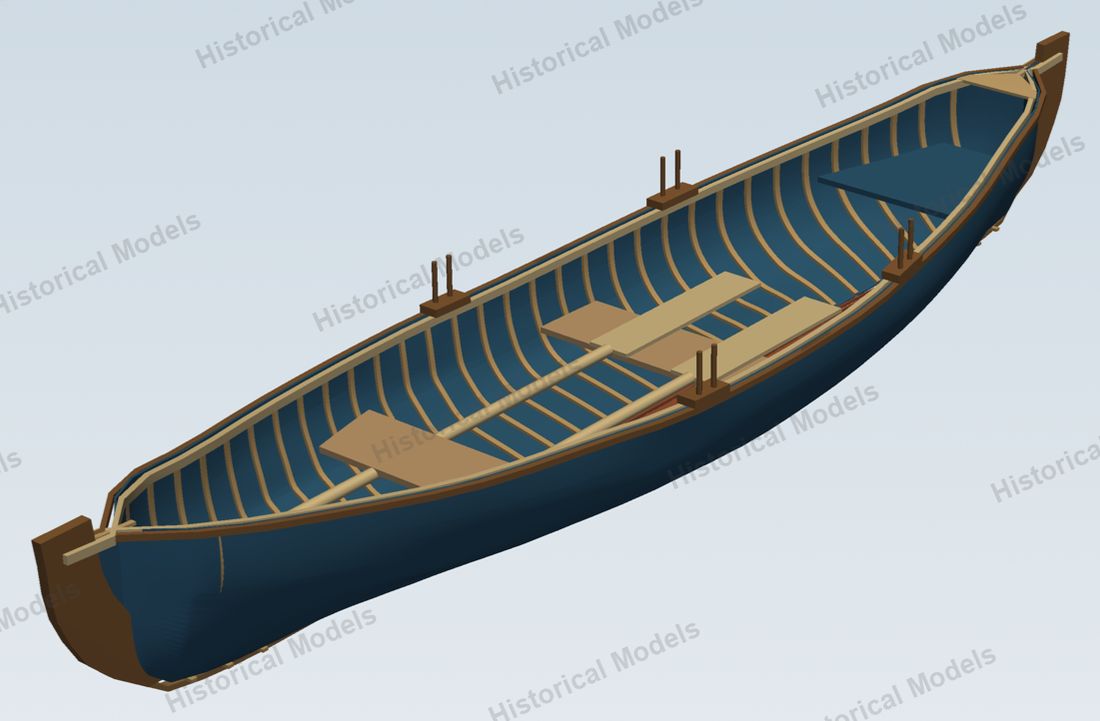
St. Lawrence River SkiffThousand Islands rowing skiff, c.1915 · model plan at 1:12 and 1:8 · every part in STEP and STL · every part drawn
A 15-foot lapstrake cedar guide boat of the Thousand Islands, built plank by plank and rib by rib from the National Park Service's laser survey of a Skaneateles-built skiff at the Antique Boat Museum.
73 files, 130 parts, 56 drawing sheets
73 files, 130 parts, 56 drawing sheets
$7.50 - both scales (1:12 and 1:8) included
Build one, get one free: email us photos of the model you built and your next beginner kit is free.
Buy the plan - $7.50Digital files. Nothing is shipped. No refunds.
Watch her build
Every part of the plan going on one at a time, in the order of the build guide.
Her story
The Thousand Islands skiff
Along the St. Lawrence River, where it runs out of Lake Ontario through the Thousand Islands, fishing guides developed in the mid-1800s a light, fast, double-ended rowing skiff: lapstrake cedar over steamed ribs, sharp at both ends, built to be rowed twenty miles in a day with a party of anglers aboard. By the 1860s it had a standard form, and when President Ulysses S. Grant spent three days fishing in the islands in 1872 as George Pullman's guest, the St. Lawrence skiff became famous.
This boat
She was built about 1915 by the Skaneateles Boat and Canoe Company of Skaneateles, New York - begun by Nelson Bowdish in 1876 and renamed in 1893 - as a 'Special Light River Skiff': 5/16" selected white cedar planking over elm ribs, copper fastened, butternut decks, two cypress rowing seats, a cedar stern seat and 7 1/2 ft spruce oars. She sold new for $80. She is kept at the Antique Boat Museum in Clayton, New York, where the Historic American Engineering Record measured her with a laser scanner in 2015.
Built from the parts

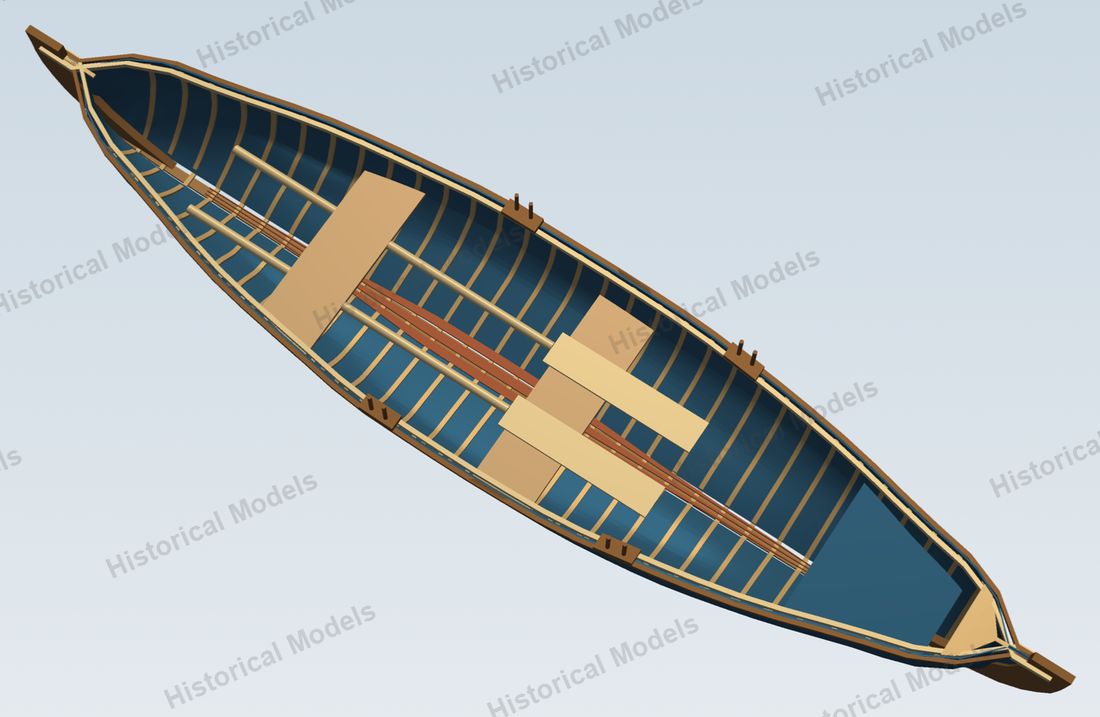
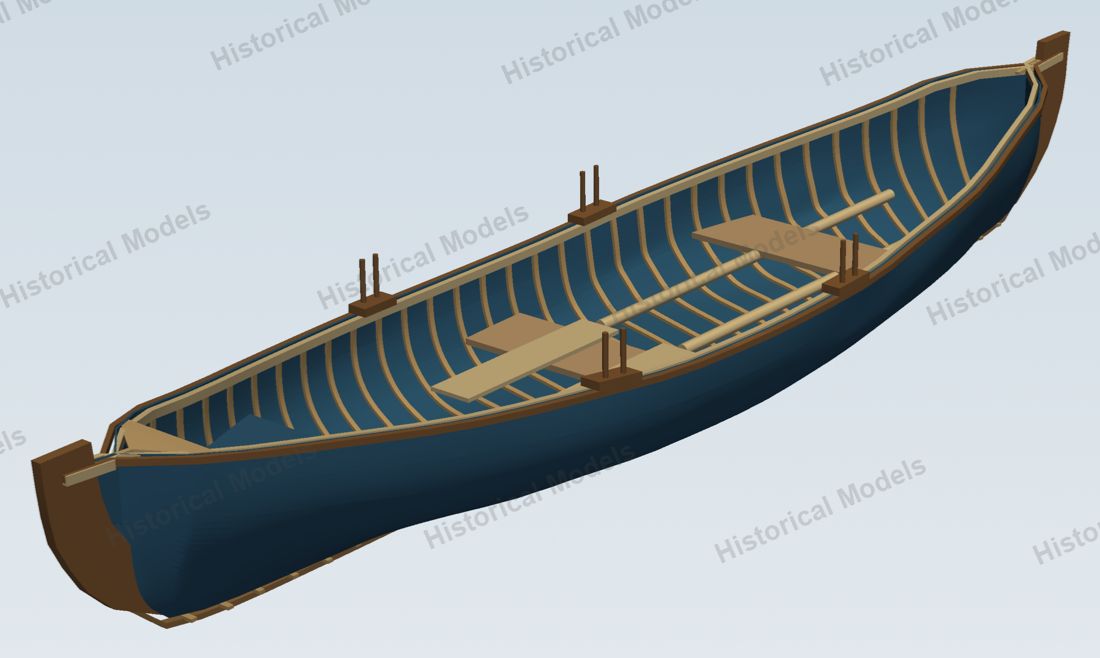

Computer pictures of the boat put together from nothing but the plan's own part files, each in its place.
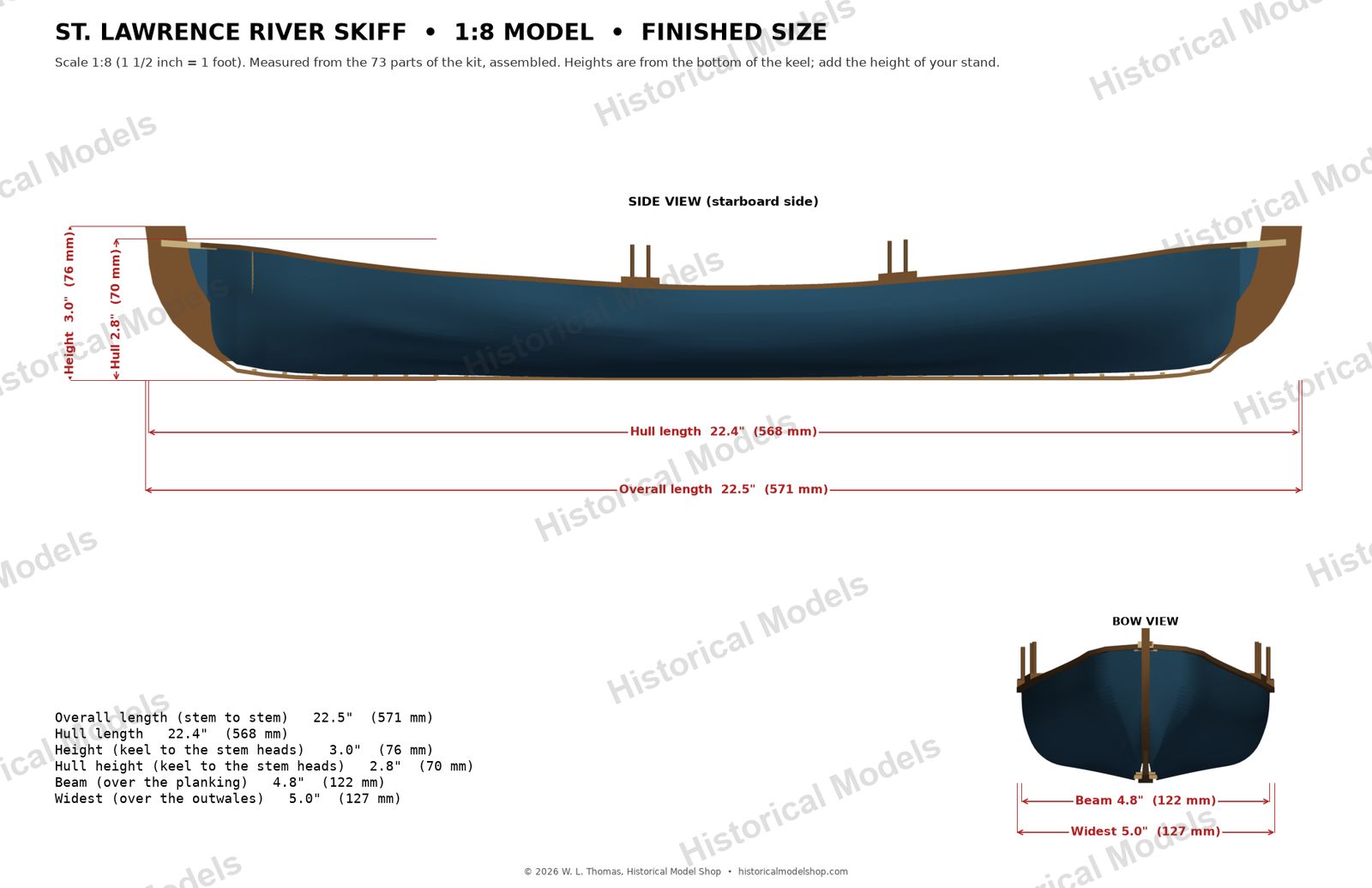
Finished size
1:12 (1 inch = 1 foot)
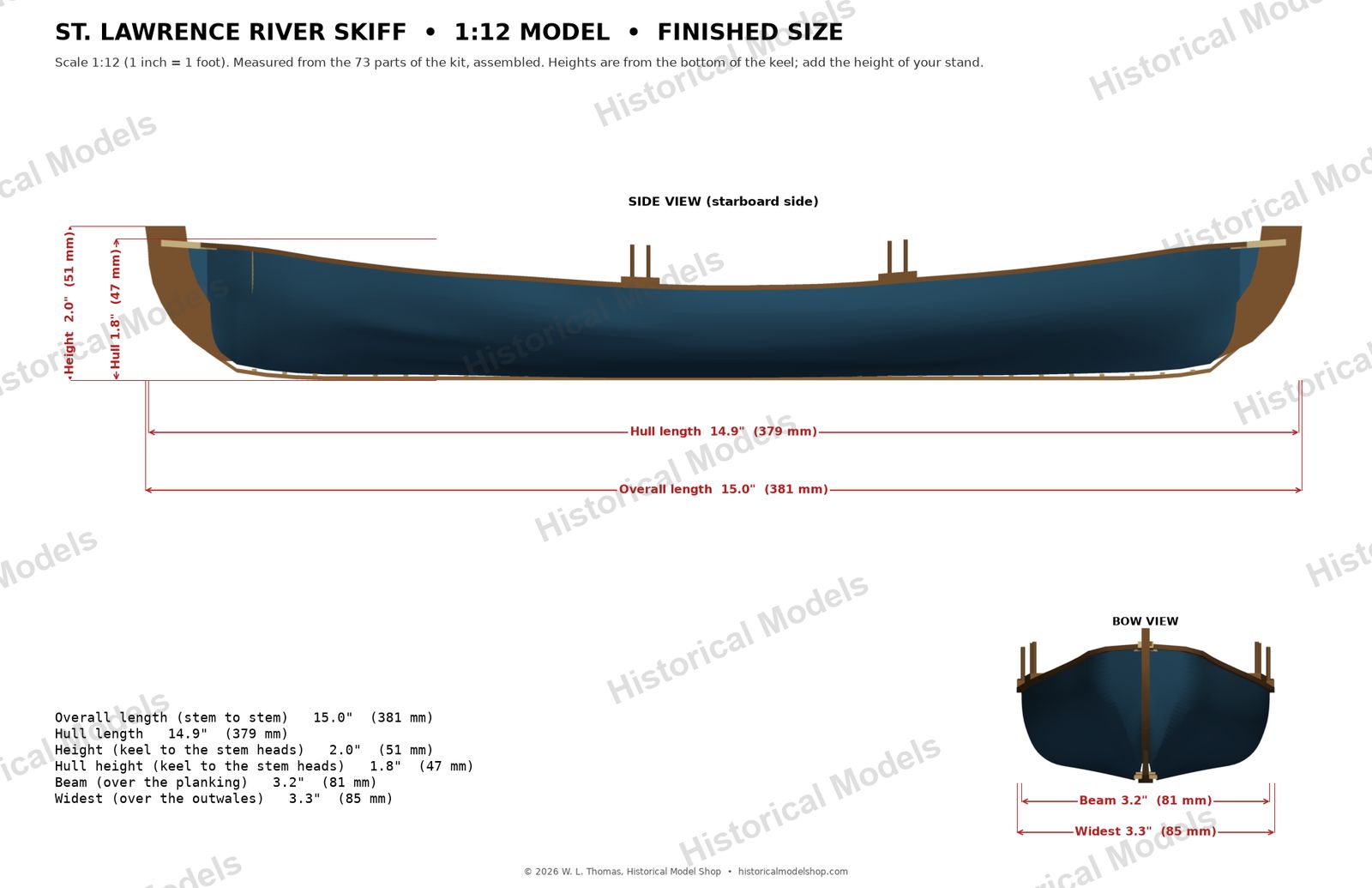
1:8 (1 1/2 inch = 1 foot)
What is in each plan
- Every part as a STEP file (inches) and as an STL file (millimetres), at model size and each in its exact place: open them together and the boat assembles itself. Ready for PrusaSlicer, Bambu Studio, OrcaSlicer or Cura, or for CAD and CNC.
- Drawing sheets (PDF, letter size), one for each different part, with a 1-inch check square, and the parts book with every sheet in one PDF.
- The build guide: her story, then the boat in stages, each with a picture of the model so far.
- The size drawing with every measurement.
Where the plan comes from
This plan is built from the Historic American Engineering Record's measured drawings, HAER NY-561 (National Park Service; drawn by Ryan Pierce and Todd Croteau, 2015, from a laser scan of the boat): the lines and table of offsets (waterlines, buttocks and sheer at 11 stations), the plan, profiles and midship section, the stem profiles and the full-size gunwale section, and the data pages with the 1915 catalogue description. She is 14'-11 7/8" long with a 3'-3 1/4" beam.
One printed offset is a misprint and is corrected (waterline 3 at station 8). The strakes' widths (the laps are drawn but not measured), the rib, gunwale, seat and deck sizes, and the positions of the seats, decks, floorboards and tholepins are RECONSTRUCTED from the drawings and say so on their sheets. The wicker chair back of the stern seat is left out.
You may not sell, share or distribute the plan or its files, but you are welcome to build this boat, as many as you like, and to sell the models you build. These are digital files and, as such, there are no refunds.
Building the history of America is what this project is for. Enjoy!
— W. L. Thomas, Historical Model Shop, historicalmodelshop.com