Home › Turtle
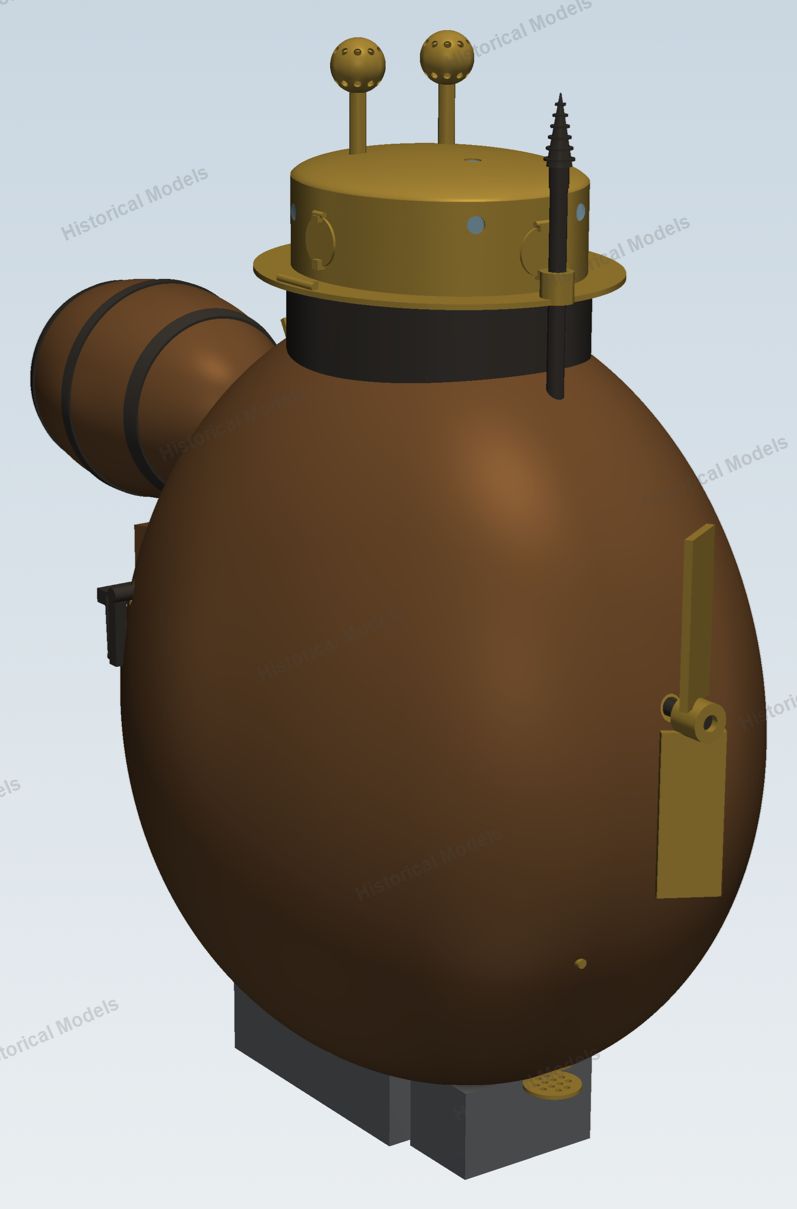
TurtleDavid Bushnell's submarine, 1775-76 · model plan at 1:12 and 1:6 · every part in STEP and STL · every part drawn
The first submarine ever used in war, reconstructed part by part from Bushnell's own description and the eyewitness accounts of 1775-1815.
85 files, 95 parts, 70 drawing sheets
85 files, 95 parts, 70 drawing sheets
Digital files. Nothing is shipped. No refunds.
Watch her build
Every part of the plan going on one at a time, in the order of the build guide.
Her story
The man
David Bushnell (born 1740, Saybrook, Connecticut) sold his share of the family farm to go to Yale in 1771, at about 31. There he proved that gunpowder would explode under water, and planned a vessel that could carry a charge to an enemy ship unseen. He finished it in 1775 at Saybrook, with the brass work made by the New Haven clockmaker Isaac Doolittle and the mechanic Phineas Pratt.
The boat
One man sat inside, his head in the brass crown, and worked everything by hand and foot: a screw 'oar' in front to row forward or back, another near the top to rise or sink, a rudder, a foot valve to let water in and two pumps to force it out, a water gauge and a compass lit by foxfire, air for about thirty minutes, and a wood screw on top to fasten a 150 lb powder magazine with a clockwork timer to a ship's bottom. It was the first submarine ever used in war.
The attack
On the night of 6-7 September 1776, with George Washington's support, Sergeant Ezra Lee of Lyme took the Turtle against Admiral Howe's flagship HMS Eagle off Staten Island. He cranked for two and a half hours against the tide, dived under the stern, but the screw would not bite - Bushnell believed it struck an iron strap near the rudder. Lee lost the ship while shifting, was chased near Governor's Island and cast off the magazine, which blew up about an hour later with a great column of water.
After
Later attempts on the Hudson failed too, and in October 1776 the sloop carrying the Turtle was sunk by British frigates. Bushnell recovered his boat but gave up the project, and its fate is unknown. He went on to make floating mines (the 'Battle of the Kegs', 1778), served in the Corps of Sappers and Miners, and later lived quietly in Georgia as 'Dr. David Bush', where he died in the 1820s.
Built from the parts
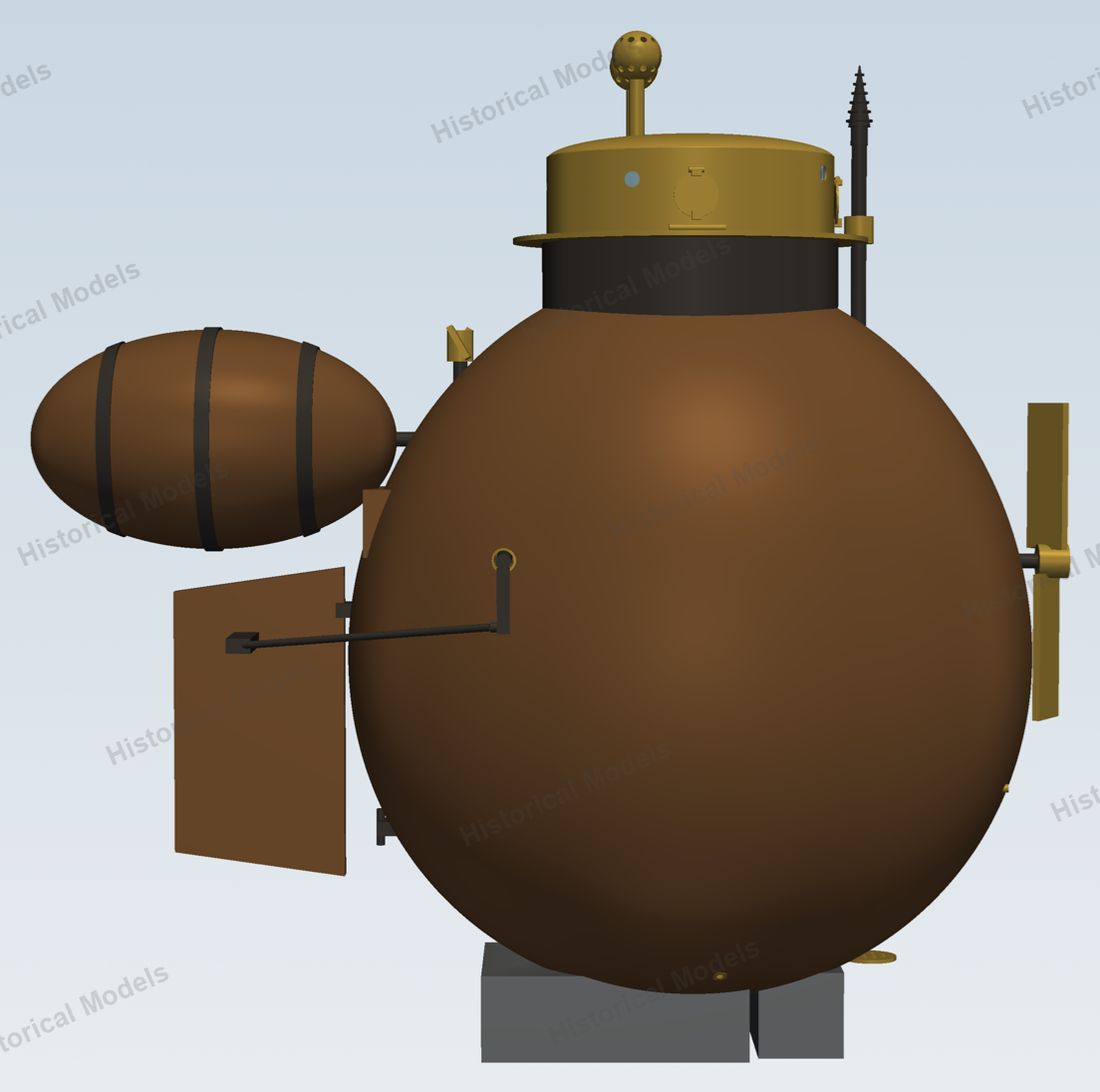
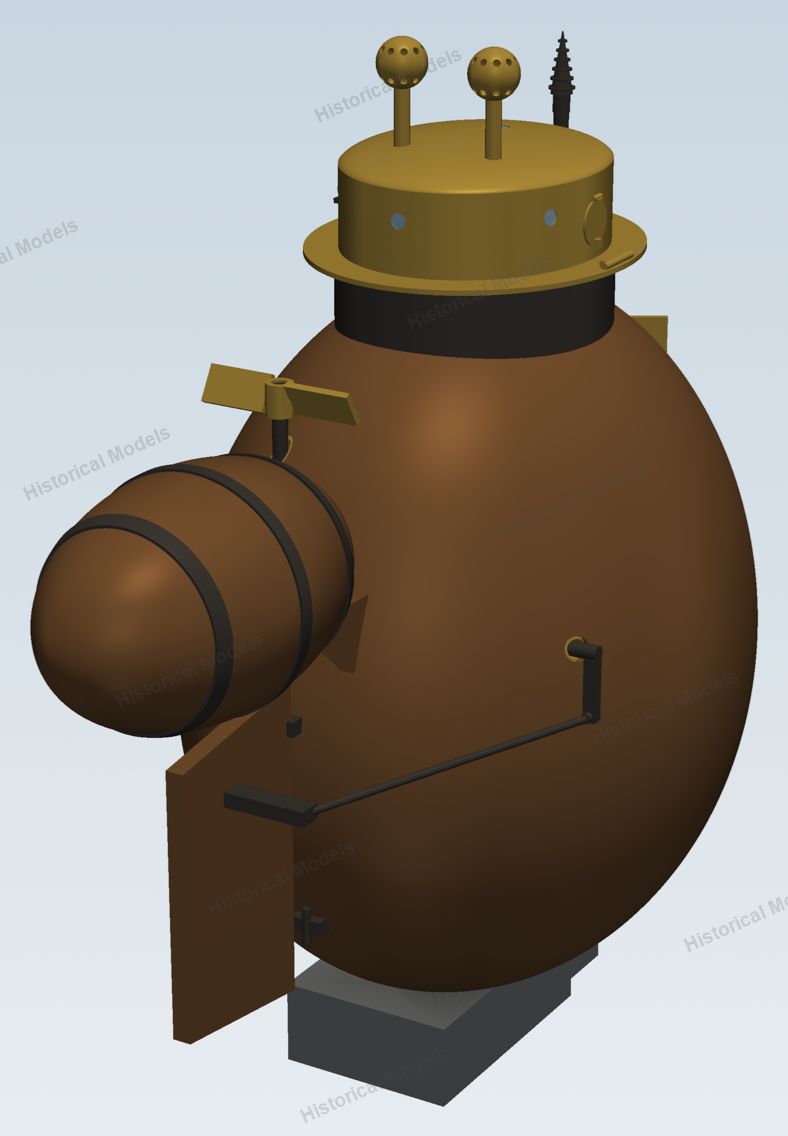
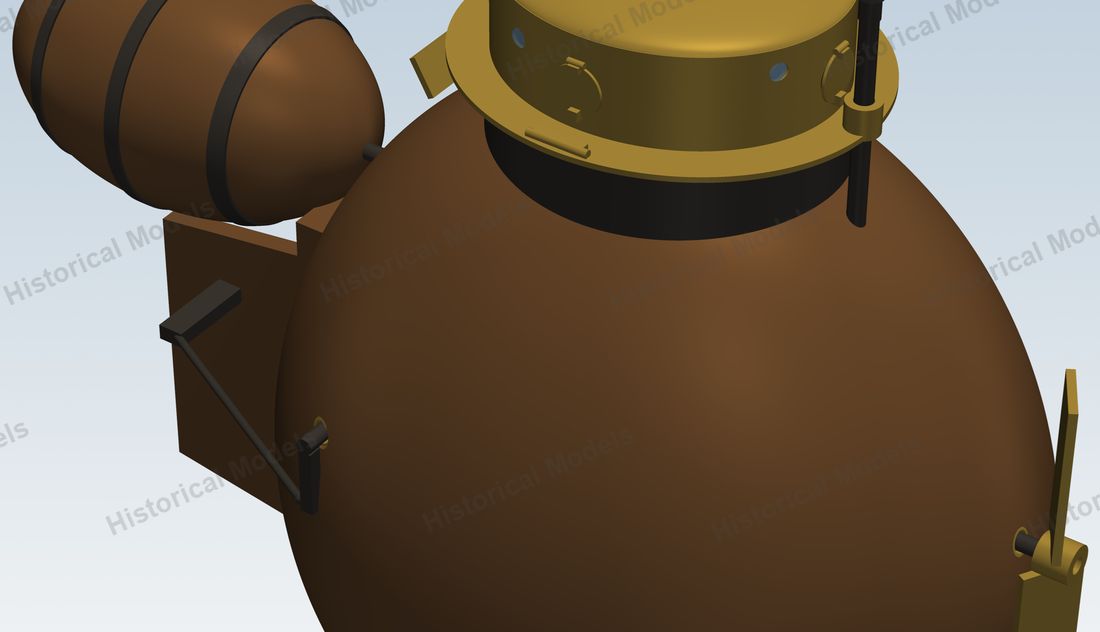
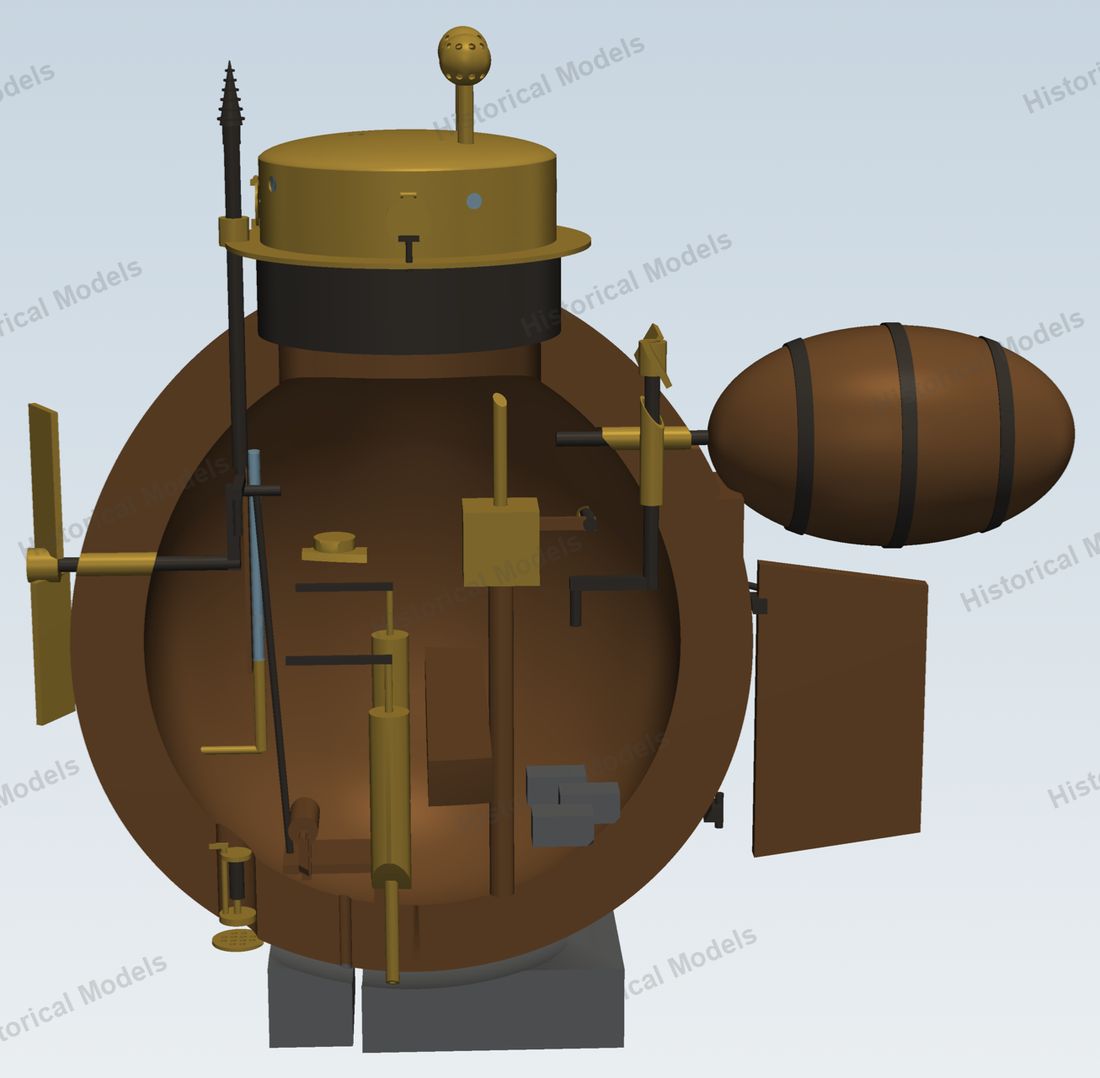
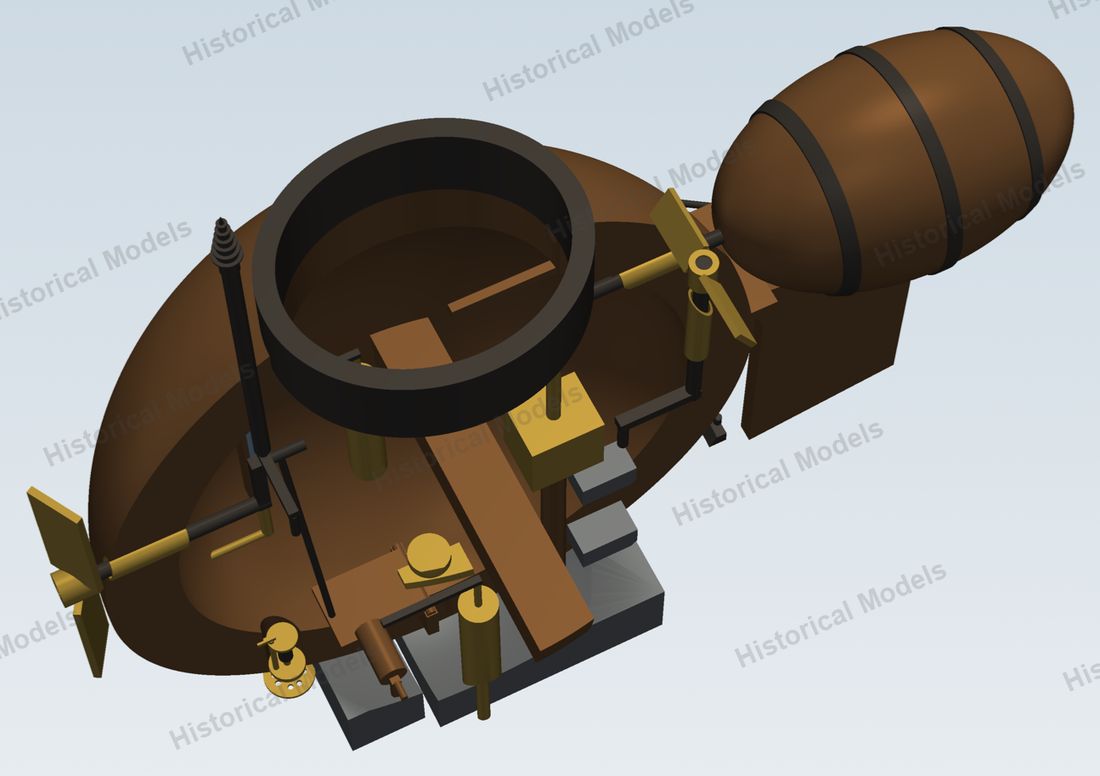
Computer pictures of the boat put together from nothing but the plan's own part files, each in its place.
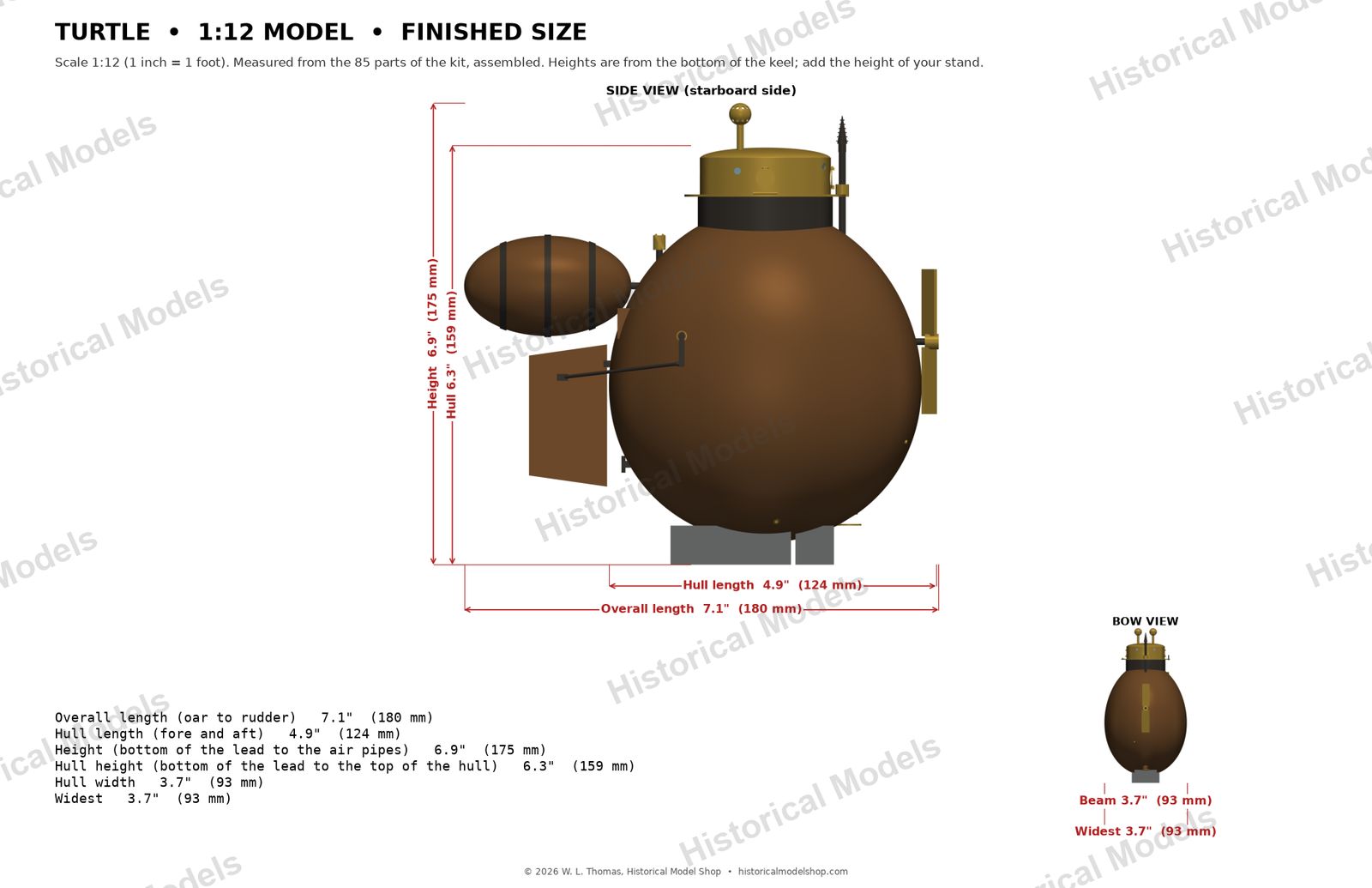
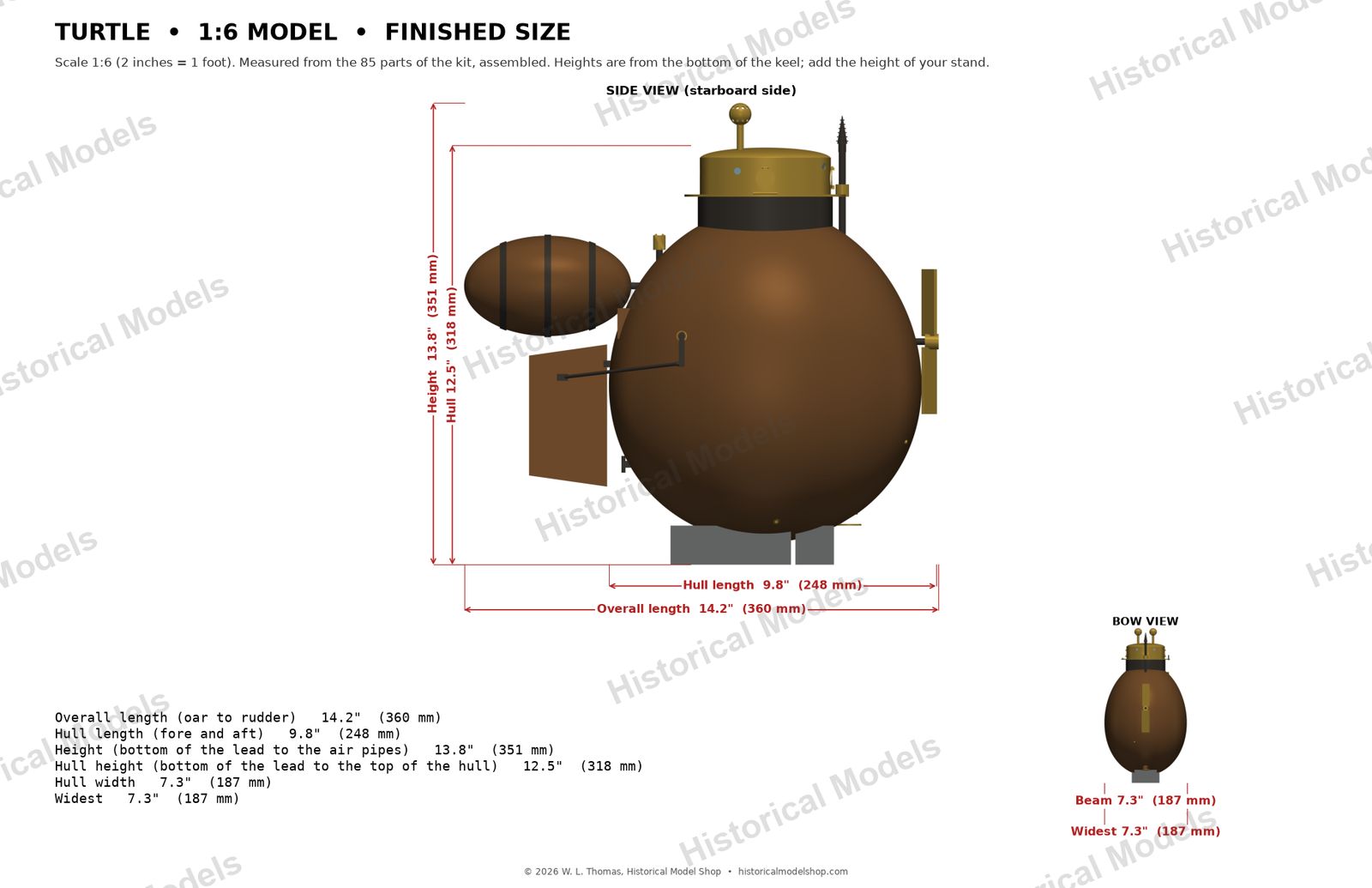
Finished size
1:12 (1 inch = 1 foot)
1:6 (2 inches = 1 foot)
What is in each plan
- Every part as a STEP file (inches) and as an STL file (millimetres), at model size and each in its exact place: open them together and the boat assembles itself. Ready for PrusaSlicer, Bambu Studio, OrcaSlicer or Cura, or for CAD and CNC.
- Drawing sheets (PDF, letter size), one for each different part, with a 1-inch check square, and the parts book with every sheet in one PDF.
- The build guide: her story, then the boat in stages, each with a picture of the model so far.
- The size drawing with every measurement.
Where the plan comes from
NO DRAWING OF THE ORIGINAL SURVIVES - Bushnell himself wrote in 1787 that he could not describe it fully 'without drawings'. Every Turtle, including the museum replicas, is a reconstruction. This plan follows Bushnell's own description (his 1787 letter to Thomas Jefferson, printed by the American Philosophical Society in 1799) for what every part was and where it went, the period accounts of Dr. Benjamin Gale (1775), Ezra Lee (1815) and David Humphreys for sizes (length not over 7 to 7 1/2 ft, height not over 6 ft, oak walls at least 6 in thick, 700 lb of fixed lead and 200 lb that could be let go, a 3 in hand door, an 18 x 1 in gauge tube, propeller blades about 12 x 4-5 in), and the modern working replicas only where the old texts are silent.
Every sheet says whether its part is PERIOD (described in 1775-1815) or RECONSTRUCTED. Modern additions that Bushnell never described - a steel deck, a foot-pedal rudder, a separate water tank - are left out.
You may not sell, share or distribute the plan or its files, but you are welcome to build this boat, as many as you like, and to sell the models you build. These are digital files and, as such, there are no refunds.
Building the history of America is what this project is for. Enjoy!
— W. L. Thomas, Historical Model Shop, historicalmodelshop.com